

Dumbbell Bicep Curl
-
 10-12 reps
-
 Beginner
-
 Biceps
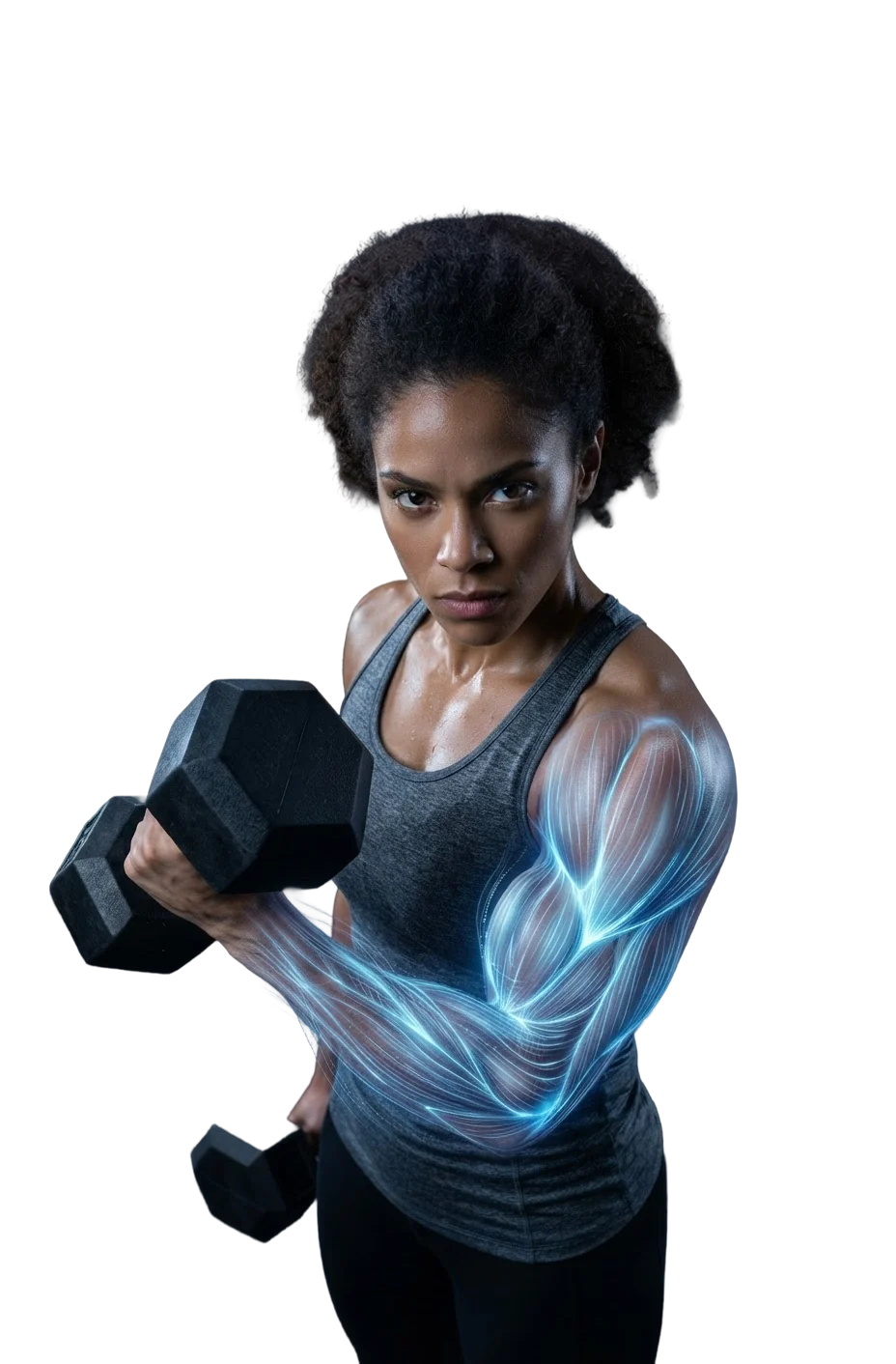
The standard dumbbell bicep curl is one of the simplest arm exercises to learn, curling a dumbbell in each hand from full extension to shoulder height. Its simplicity is also why small form slips — mainly shoulder swinging — are easy to overlook without checking specifically for them.
Meet Muscle Booster
-
 3000+exercise library
- 70M+downloads
- 4.6rating**based on 128,000 AppStore ratings
Featured in

Muscles worked by Dumbbell Bicep Curl
-
 Primary
Biceps
Found on the front of your upper arm, these muscles are the ones that bulge when you flex. They drive the curl, lifting each dumbbell up toward your shoulder.
-
 Assisting
Deep arm muscle (brachialis)
Lying beneath your biceps, this upper-arm muscle assists by bending your elbow, especially as your biceps tire.
- Assisting
Forearms
The muscles running from your elbow to your wrist. They help hold each dumbbell steady in your hand so it doesn’t tip or drop.
How to do Dumbbell Bicep Curl
-
Stand holding a dumbbell in each hand at your sides, palms facing forward.
-
Pin your elbows to your sides and keep your shoulders down and back.
-
Curl both dumbbells (or alternate arms) toward shoulder height, bending only at the elbows.
-
Squeeze your biceps briefly at the top without letting your elbows swing forward.
-
Lower the dumbbells under control to full extension, then repeat for your reps.
Why add Dumbbell Bicep Curl to your plan
-

Simple, accessible exercise
For building bicep strength.
-

Trains each arm independently
If done one at a time, helping address imbalances.
-

Low equipment requirement
Just a pair of dumbbells.
-

Complements hammer curls and cable curls
For varied bicep stimulus.
Form mistakes to avoid
-
Using shoulder or momentum swing
Instead of isolating the biceps to lift the weight.
-
Letting the elbows drift forward away from the torso
Reduces isolation.
-
Curling both arms unevenly
With one moving faster or higher than the other.
-
Rushing the lowering phase
Instead of controlling the return.
Muscle Booster insight

Check that your elbows stay at your sides from first rep to last
A dumbbell curl has so few moving parts that it’s easy to assume it can’t be done wrong. But a small shoulder swing can become a habit precisely because the exercise feels too simple to check. Curl in front of a mirror, or record a short video from the side, and watch where your elbow sits relative to your torso from the first rep to the last. If it stays glued to your side, you’re doing it right.






People also ask
FAQ
Find answers to common questions about this exercise.
Alternating vs. both-arms-at-once dumbbell curls — is one better?
Alternating can make it easier to focus on strict form per arm; curling both together is more time-efficient — both are effective depending on preference.
How do I stop swinging my arms during curls?
Drop to a weight you can curl without any shoulder movement and keep your elbows glued to your sides. Checking your form from the side in a mirror or on video helps you spot the elbows drifting forward, which is the usual start of the swing.
What muscles does a dumbbell curl work?
Mainly the biceps, which curl the dumbbell from full extension to shoulder height. The forearms assist the grip, and the shoulders and core keep the body steady.
Should I curl with palms facing forward or turned?
A palms-forward (supinated) grip is the standard version and emphasises the biceps. Turning the palms inward as in a hammer curl brings in the brachialis and can feel gentler on the wrists, so many routines use both.