You don’t need a pricey gym membership or racks of equipment to get in shape. In fact, some of the most effective weight loss workouts can be done at home, using just your bodyweight and a bit of space.
This guide breaks down simple, realistic exercises you can do at home to burn calories, build strength, and start feeling more energized.
Can You Lose Weight Working Out at Home?
Yes, you can. Losing weight at home is not only possible, it can be just as effective as going to the gym. You don’t need a gym full of machines to see progress, what really matters is that you show up regularly.
Consistency is key: even short workouts, done regularly, can create real change. The key is showing up often enough that exercise becomes part of your daily rhythm.
Exercise works best with balance: a healthy routine for weight loss combines movement with mindful nutrition, good sleep, and stress management. If one piece is missing, results can stall. When these elements work together, your body has the support it needs to change.
Technique and intensity shape the results: moving with good form and at the right pace ensures you are actually training your body rather than just going through the motions. Even during rest periods, staying lightly active can make your workouts more effective. Paying attention to these details helps you get the most out of every session.
Progressive overload keeps you improving: this is the idea of challenging your body a little more as the weeks go on. At home, that could mean adding extra repetitions, taking shorter breaks, or trying a tougher version of the same exercise. Each small step builds on the last, which is how you keep moving forward.
When you combine consistency, progression, balance, and technique, working out at home becomes not only realistic but also powerful for long term weight loss.
7 At-Home Weight Loss Exercises With No Equipment
You do not need a gym full of machines to get a powerful workout. These simple moves use only your bodyweight, yet they can raise your heart rate, strengthen muscles, and help burn calories when done consistently. Be sure to start each session with a warm-up to get your muscles moving, reduce injury risk, and improve your performance.
1. Cross Standing Crunch

Target muscles: core, obliques, and hip flexors
How to do it:
Stand tall with feet hip-width apart and hands placed behind your head.
Lift your right knee toward your chest while twisting your torso so your left elbow meets it.
Return to standing and repeat on the other side.
Continue alternating sides in a controlled rhythm.
Beginner modification: move slowly and keep the range of motion smaller.
Advanced modification: add a hop as you switch sides to increase intensity.
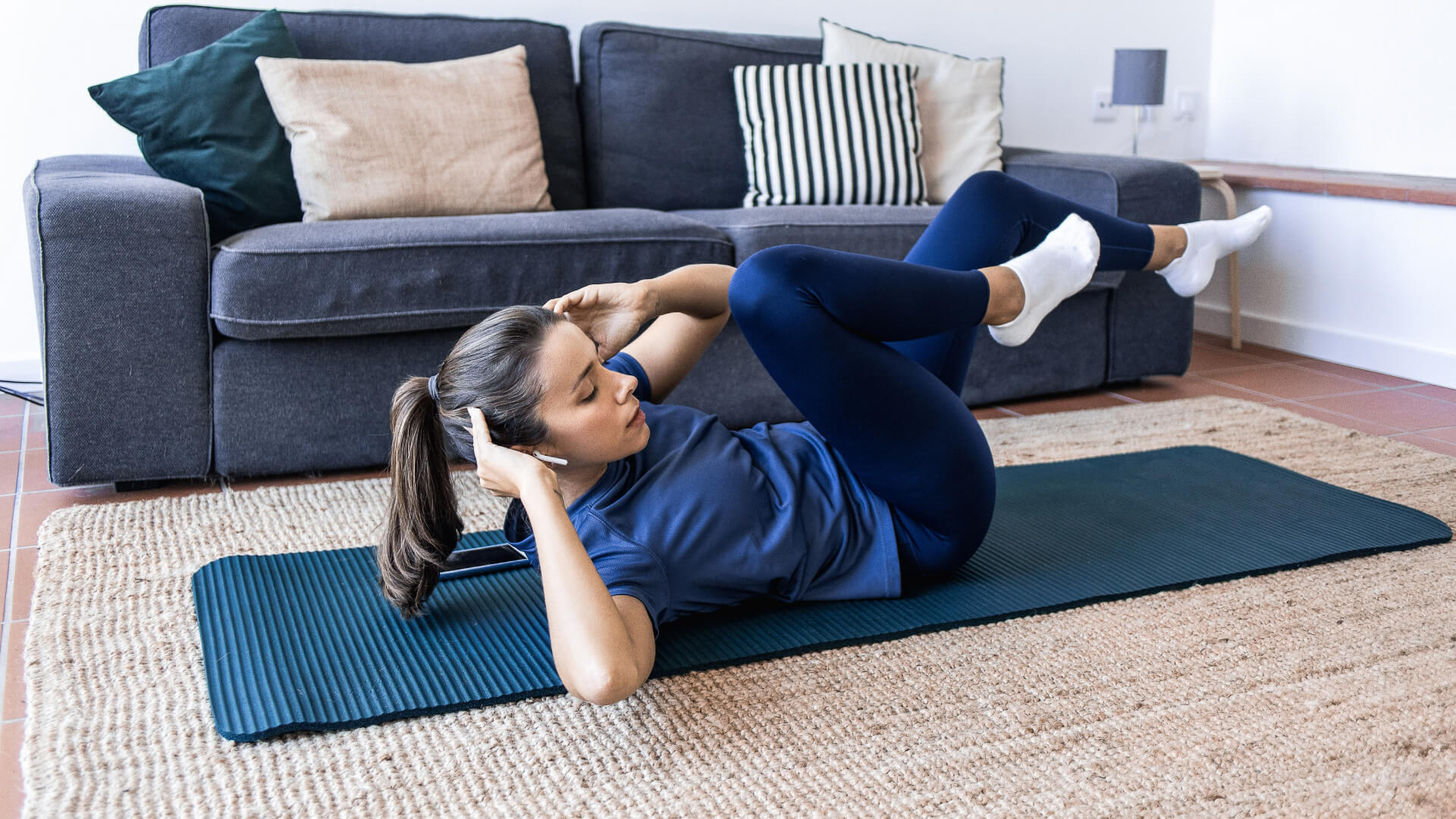
2. Bicycle Crunch

Target muscles: core, obliques, and lower abdominals
How to do it:
Lie on your back with hands behind your head and legs lifted at a 90-degree angle.
Extend your right leg while bringing your right elbow toward your left knee.
Switch sides in a pedaling motion, keeping your lower back pressed into the floor.
Beginner modification: keep both feet slightly higher off the floor to reduce strain. Advanced modification: move slowly and pause at each twist to increase core engagement.
3. High Plank Jacks

Target muscles: core, shoulders, and legs
How to do it:
Start in a high plank position with hands under shoulders and body in a straight line.
Jump your feet out wide, then quickly back together, like a horizontal jumping jack.
Keep your core tight and hips steady throughout.
Beginner modification: step one foot out at a time instead of jumping.
Advanced modification: increase speed while maintaining form.
4. Mountain Climber

Target muscles: core, chest, shoulders, and legs
How to do it:
Begin in a high plank with hands firmly on the ground.
Drive your right knee toward your chest, then switch legs.
Continue alternating at a steady or fast pace while keeping your hips low.
Beginner modification: slow the pace and pause briefly with each knee drive. Consider the variation where the foot goes to the outside of the hands and stands on the ground before going back.
Advanced modification: increase speed for a cardio boost.
5. Squat Jump

Target muscles: quads, glutes, and calves
How to do it:
Stand with feet shoulder-width apart.
Lower into a squat, then push explosively through your heels to jump upward.
Land softly and sink back into the squat position before repeating.
Beginner modification: remove the jump and do bodyweight squats only.
Advanced modification: jump higher or add a pulse squat before each jump.
6. Plank Low to High

Target muscles: core, chest, and triceps
How to do it:
Start in a low plank on your forearms.
Press up onto your right hand, then your left, to come into a high plank.
Lower back down onto one forearm at a time.
Continue alternating which arm leads.
Proper form note: focus on minimizing the swinging of the hips throughout the movement
Beginner modification: place knees on the floor for extra support.
Advanced modification: add a push-up each time you reach the high plank.
7. Modified Burpee

Target muscles: full body, including chest, core, and legs
How to do it:
Stand with feet hip-width apart.
Squat down and place your hands on the floor.
Step your feet back into a high plank instead of jumping.
Step your feet forward again and stand up tall.
Beginner modification: keep movements slow and controlled.
Advanced modification: add a push-up in the plank position or a jump at the top.
Looking for something that challenges your whole body without the burpee burnout? There are other effective options that can easily slot into your routine.
Once you are ready to level up, incorporating weight loss exercises with weights can add even more variety and challenge to your home routine. Looking for a simple way to increase intensity? Adding a few dumbbell moves to your routine can help you push past plateaus without overcomplicating your setup.
Sample Weight Loss at Home Workouts
The best workout is the one you can repeat consistently. Below are three simple flows built from the exercises above. Each table shows the number of sets, reps, and rest for every move. Choose the routine that best fits your schedule and activity level.
Beginner-Friendly Full Body Flow
Exercise | Sets | Reps | Rest |
Cross Standing Crunch | 3 | 12 each side | 30 seconds |
Squat Jump | 3 | 10 | 45 seconds |
Bicycle Crunch | 3 | 12 each side | 30 seconds |
Plank Low to High | 3 | 8 each side | 45 seconds |
Weekly frequency: 3 sessions if you stay active in other ways, 4 sessions if this is your main workout.
Cardio and Core Burner
Exercise | Sets | Reps | Rest |
Mountain Climber | 4 | 20 each side | 30 seconds |
High Plank Jacks | 4 | 15 | 30 seconds |
Bicycle Crunch | 3 | 15 each side | 30 seconds |
Modified Burpee | 3 | 8–10 | 45 seconds |
Weekly frequency: 2–3 sessions if you already do other activities, 4 sessions if this is your main workout.
Balanced Mix (Intermediate Option)
Exercise | Sets | Reps | Rest |
Cross Standing Crunch | 3 | 12 each side | 30 seconds |
Squat Jump | 3 | 12 | 45 seconds |
Mountain Climber | 4 | 20 each side | 30 seconds |
Plank Low to High | 3 | 10 each side | 45 seconds |
Modified Burpee | 3 | 10 | 60 seconds |
Weekly frequency: 3–4 sessions if you are already active, 5 sessions if this is your primary workout.
3 Tips to Stick to Your Home Workout Routine
Working out at home sounds simple, but staying consistent can be surprisingly tough. Distractions, limited space, and a lack of structure can all get in the way. These tips can help you build a routine that feels doable and sustainable.
Create a Workout Space: you do not need a full home gym, but having a designated area, even a corner of a room, can make a big difference. When you step into that space, your brain recognizes it as your “workout zone,” which helps create a mental boundary between daily life and exercise time.
Use Visual Cues: set yourself up for success with reminders you can see. Lay out your workout clothes the night before or keep a yoga mat rolled out and ready to go. If you use small equipment like resistance bands, leave them somewhere visible. These cues reduce friction and make it easier to start moving.
Start with Manageable Sessions: 15 to 20 minutes is enough when you are getting started. Once it feels routine, you can gradually add time, sets, or intensity. This way, exercise becomes a steady habit instead of an overwhelming task.
FAQs About At-Home Weight Loss Workouts
1. Do I Need Equipment to Lose Weight at Home?
No. Your bodyweight is enough to create challenging workouts that burn calories and build strength. Equipment can add variety later, but it is not necessary to get results.
2. Can Home Workouts Really Replace the Gym?
Yes, for many people they can. If your goal is general fitness, weight loss, and strength, bodyweight training can absolutely get the job done. The gym can offer more variety, but it’s not a must.
3. How Long Should a Workout at Home Be?
20 to 30 minutes is plenty if you stay focused. What matters more than time is showing up regularly and moving with purpose. Short, consistent workouts beat long, inconsistent ones every time.