
This is spectacular. I bought it with mistrust at first. Afterwards I started using it and I'm happy. I love it. I like the graphics, the way they talk to you. It motivates you. It's great, it's like a personal trainer at home.
★★★★★
Closing the gap between what you see online and what matters inside.
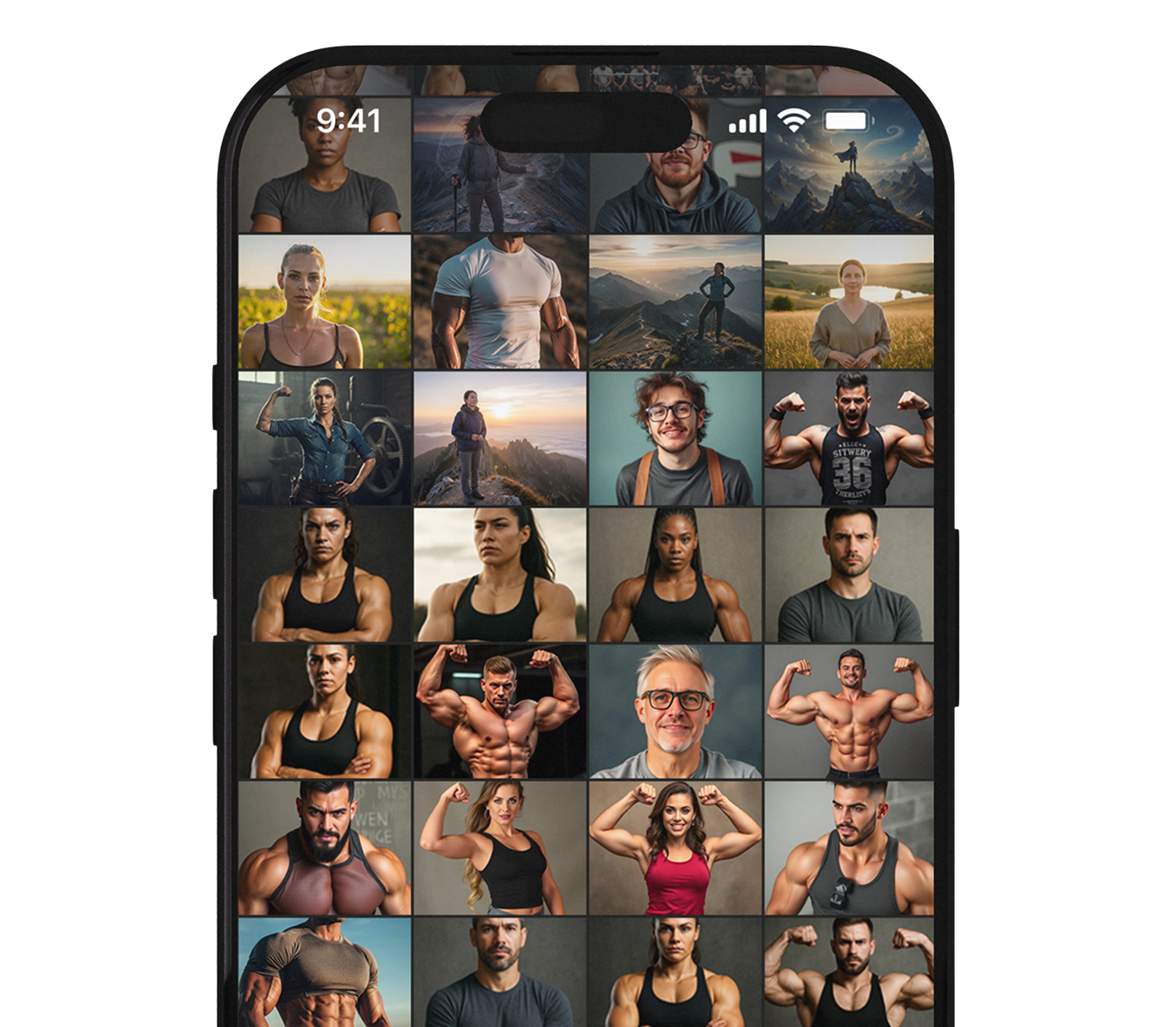
Strength is everywhere online, with sculpted bodies, heavy lifts, and physical power dominating our feeds. But is that really how we define strength in our own lives?
While physical strength is often celebrated publicly, our latest research reveals a growing disconnect between what we see online and what we truly value. For many, strength lies not in muscle but in mindset. It's resilience, confidence, self-belief, and the ability to navigate challenges.
This gap exposes a worrying deficit in how strength is represented, raising important questions about the impact these ideals have on how we view ourselves.
Meet the expert:

David J. Sautter is a NASM-certified personal trainer and performance enhancement specialist. Besides practical experience as a personal trainer, David is also a fitness writer with experience in the fitness and nutrition industry, as well as a vast understanding of exercise science, nutritional research, and sports nutrition supplements.
David breaks down the roles mental and physical strength play in life: "Mental strength is just as important as physical strength because life challenges us in ways a workout doesn't. In the gym, the weight is predictable. In life, the 'weight' shows up as stress, uncertainty, conflict, setbacks, and unexpected change. Physical strength helps you move through the world, but mental strength determines how you respond to it, keeping you consistent, resilient, and able to bounce back when life throws a curveball."
The good news? Mental strength isn't fixed. Like a muscle, it grows through experience and can be trained, strengthened, and developed over time.
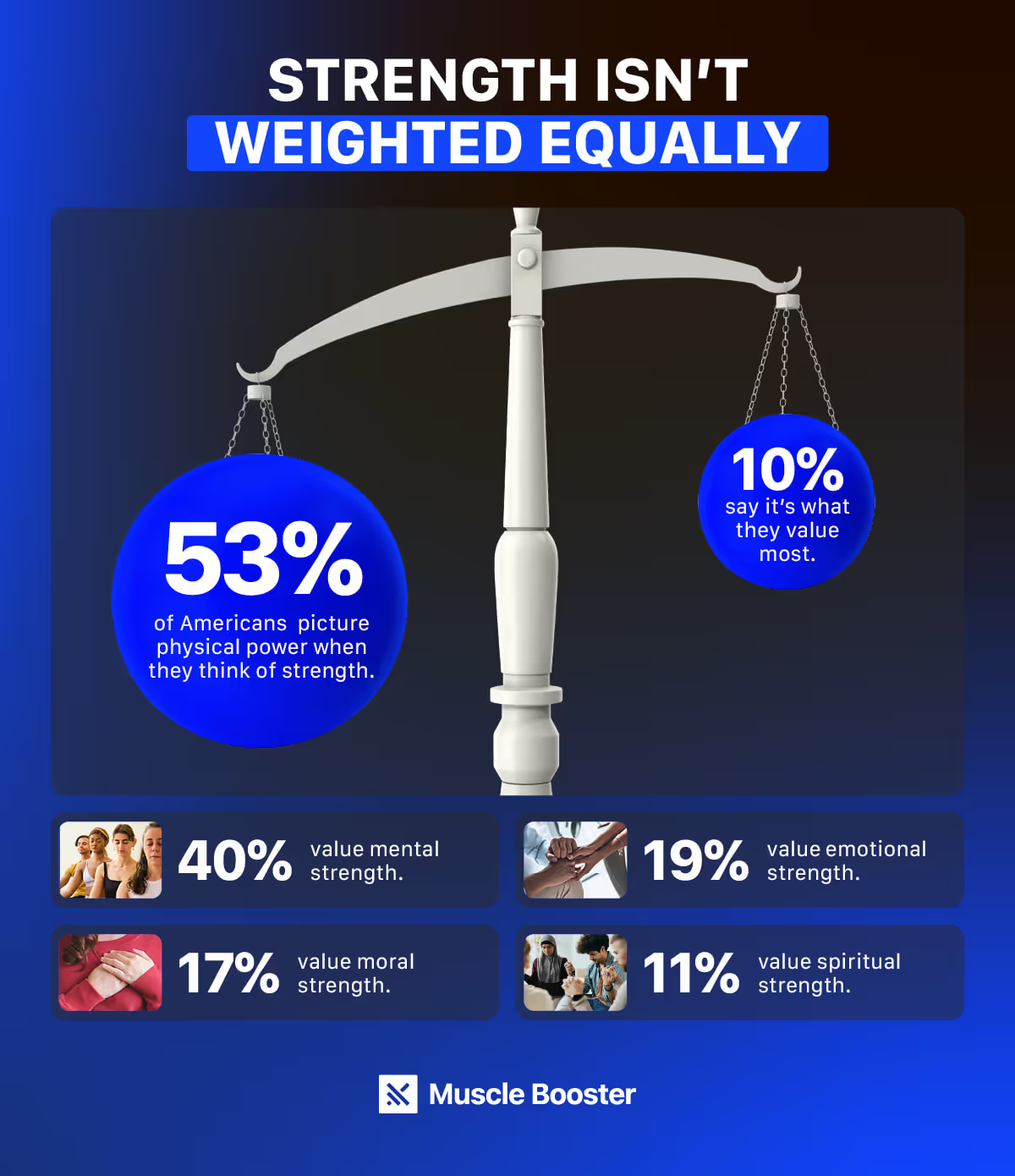
When it comes to strength, perception and personal values are worlds apart. Our recent survey1 found that when Americans think about what it means to be strong, their first instinct is physical power (53%).
But when asked what they personally value, a different picture emerges. Mental strength (40%) is ranked as the most valued form of strength overall, followed by emotional strength (19%) and moral strength (17%). Just 1 in 10 (10%) say physical strength is what matters most. This reveals a clear disconnect between the way we recognize strength and the strength we actually aspire to.
There's also a gender divide. Men (47%) value mental strength more than women (33%), meanwhile women (24%) valued emotional strength more than men (14%).
These contrasting perceptions of strength through gender continue, as women are significantly more likely to associate strength with resilience (35%) compared to men (25%), while men are more inclined to link physical power (59%) to strength than women (48%).
Together, these findings highlight what we're calling a growing strength deficit: a mismatch between what strength looks like on the surface and what people actually believe makes someone strong. But, if this perception isn't coming from within, what is feeding it?
So what is actually causing this gap between perception and value? Our research points to several key factors, but one of the most prominent is the role of artificial intelligence (AI) and social media in shaping how we see strength.
AI has become a powerful tool for generating ideas and content, with many people now using it for personal advice. However, it often highlights glorified versions of strength, focusing almost exclusively on unrealistic and narrow images.
With over two-fifths (44%) of Americans admitting that AI tools, such as ChatGPT, influence their perception of themselves - rising to over two-thirds (68%) for Gen Z - these portrayals risk reinforcing the misconception that strength is only about physicalities, while self-love and mental resilience are overlooked.
Similarly, social media amplifies this narrative. 9 in 10 (91%) of Americans say that social media promotes an unhealthy image of strength, where physical fitness and appearance are often disproportionately celebrated.
Alongside the damaging narratives perpetuated by online platforms, many of the messages Americans received growing up were centered around physical strength. In fact, 40% of Americans recall being told to 'work hard and endure', with this rising to almost half (49%) of men. Messaging like this reinforces the discourse, particularly for men, that mental strength is less valued, emphasizing toughness and perseverance over emotional resilience.
Meet the expert:

Dr. Cassidy Jenkins, PhD, is a clinical psychologist, educator, and mental health consultant who specializes in the mind–body connection, behavior change, and making mental health tools practical and accessible. Her work focuses on helping people build sustainable routines, reduce stress, and improve well-being through realistic, evidence-based approaches.
Dr. Cassidy Jenkins explains how this can be damaging: "The messages we receive from the world around us, particularly through social media, AI, and early socialization, can shape our perceptions of strength in ways that are often limiting. Many people, especially men, are taught to equate strength primarily with physical toughness or performance.
"In reality, strength also includes resilience, emotional flexibility, and the ability to be self-aware and vulnerable. Constant exposure to unrealistic or one-dimensional ideals of strength can reinforce harmful beliefs, such as the idea that being strong means being invulnerable, when psychological resilience and mental adaptability are just as critical."
To explore how AI visualizes strength, we ran an experiment across four leading AI platforms: ChatGPT, Gemini, DeepAI, and Adobe. Using 10 different devices, we asked each platform to generate images based on four prompts: show me a strong person, show me a strong man, show me a strong woman, and show me a mentally strong person.
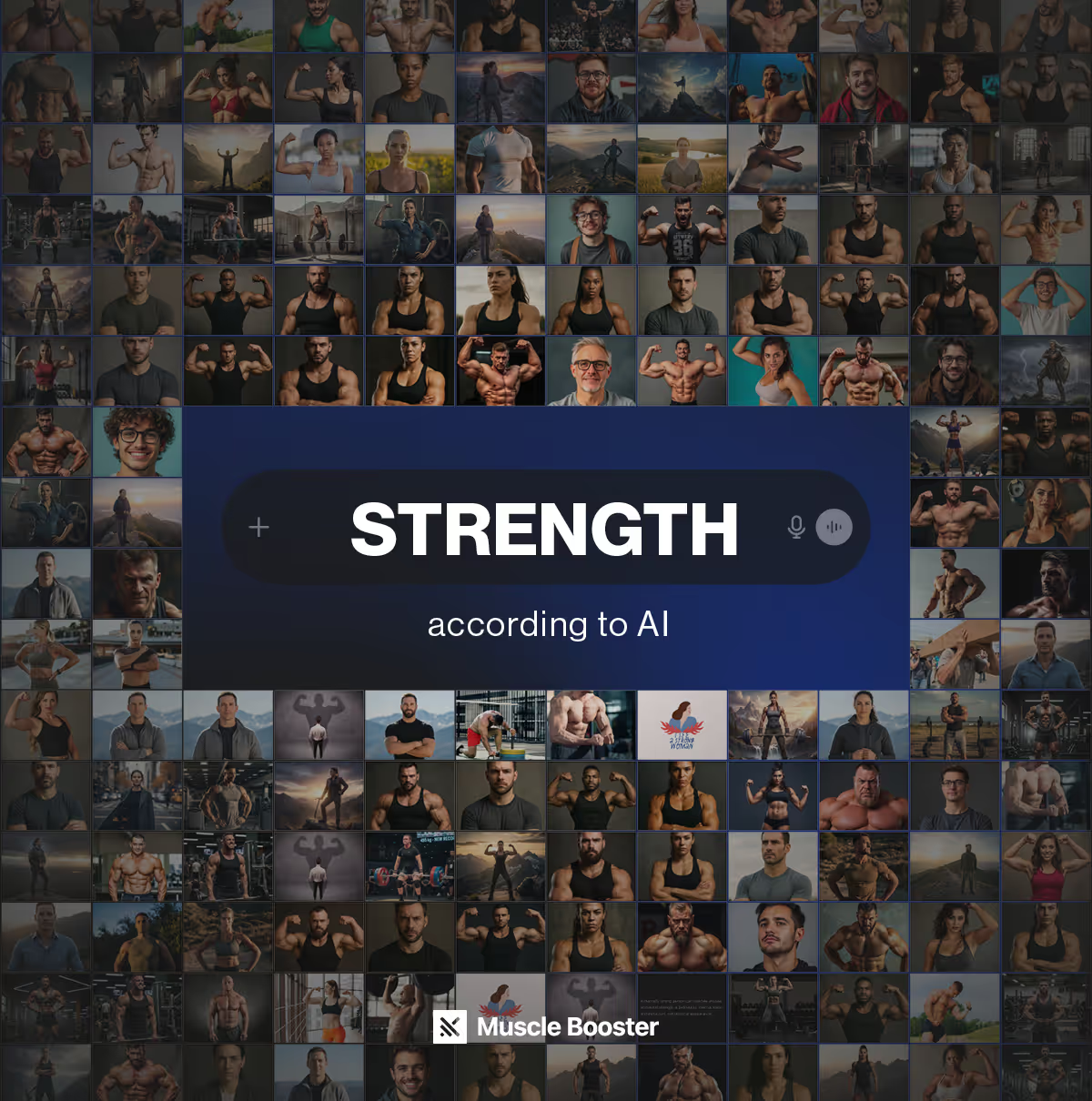
The results were striking. All platforms primarily focused on muscular physiques, mainly showing young, able-bodied individuals. Images generated by ChatGPT, in particular, had the least representation, focusing on exposed skin and stereotyped muscles.
In particular, in the strong person prompt, 83% of images featured men and 95% depicted younger figures, with the same percentage showing exposed skin and exaggerated muscle definition. Even when prompted with mentally strong, 75% of images showed male figures and 98% focused on younger people, suggesting that strength, both physical and mental, is consistently associated with youth and masculinity.
The strong woman prompt only further highlighted this bias, with 100% of images showing younger women and 68% featuring excessive muscle definition.
Overall, these results show that AI's representations of strength are narrowly defined and heavily stereotyped. With platforms like ChatGPT reaching over 5.6 billion2 monthly visits, these biased depictions risk shaping societal perceptions, spreading limited ideals of what it means to be strong.
David explains how AI should be used with caution: "One of the biggest risks is that AI tends to generalize. It pulls from patterns, not from real human nuance. AI can reflect stereotypes or overly simplified views of fitness, mental health, or 'strength.' If someone is already feeling uncertain, insecure, or overwhelmed, a generic answer, no matter how polished, can accidentally reinforce their doubts or point them in a direction that doesn't fit their reality. Put simply, advice that isn't tailored to the individual can push them further from where they want to be.
"AI is a part of our culture and life now, whether we like it or not. But I think it should be looked at for what it is: a tool, not a replacement for human connection, professional judgment, or lived experience."
AI doesn't only provide an incomplete representation of what strength really is, but also an exclusionary one. It fails to capture the diversity of experiences, body types, and even gender, encouraging unrealistic and narrow expectations.
Strength is often associated with muscle, but for many people strength comes from within. It's rooted in mindset and is a quality that a person can train and hone just like any physical attribute.
David explains how mental strength develops: "The brain adapts to repeated stimulus the same way muscle tissue does, meaning mindset and confidence are trainable. The brain changes itself over time based on what we repeatedly think, feel, and do. It rewires itself based on repetition, just like how a muscle responds to repeated resistance. It's very similar to adding weight to the bar each week. Eventually, your brain starts defaulting to capability instead of fear."
Everyone's journey is different, however, with regular and consistent efforts, many people begin to feel growth in their mental strength. The long-term changes, such as confidence and resilience, may manifest in more subtle ways, such as when facing stress or challenges. Consistency and self-love is the key here.
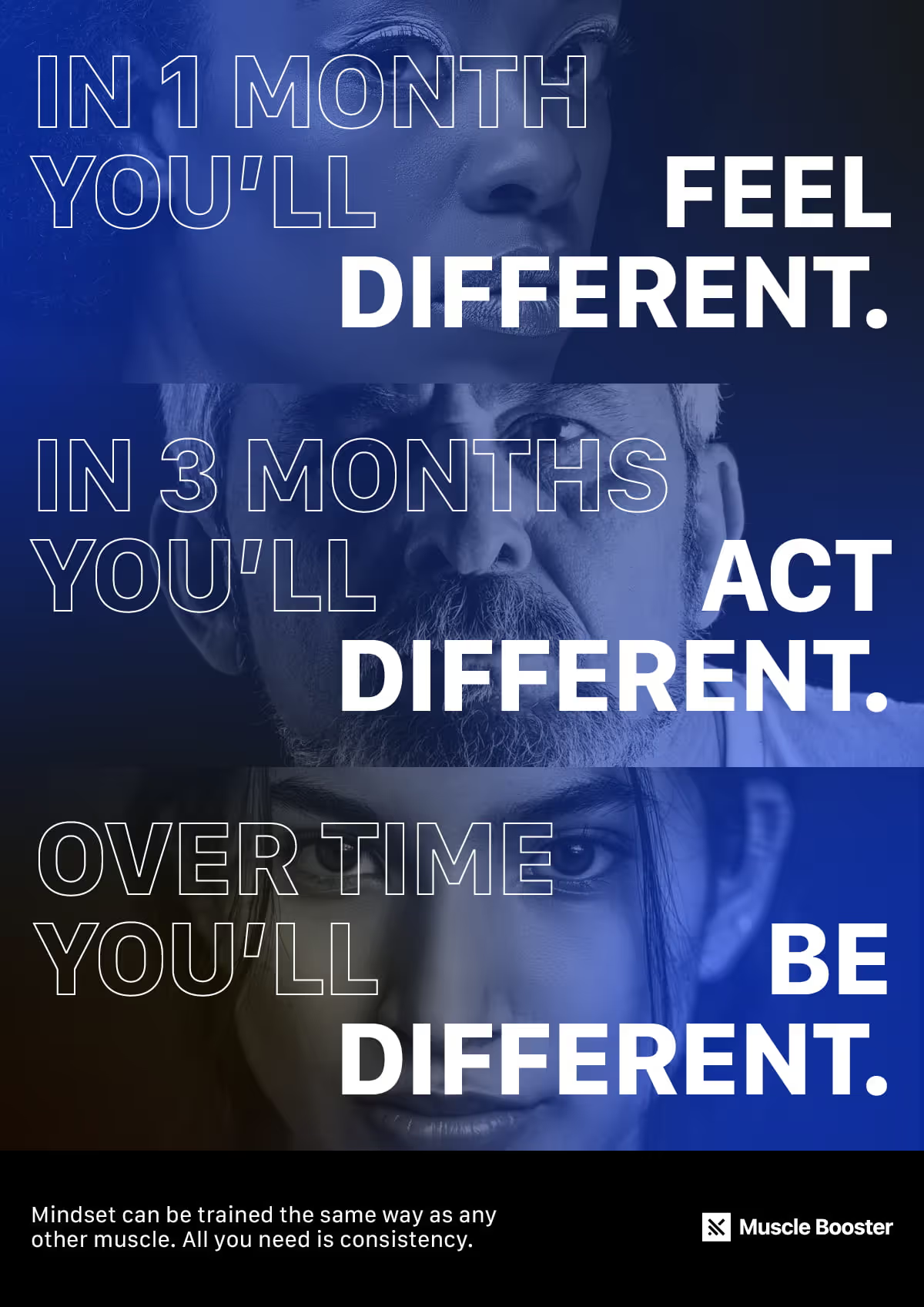
It's important to remember that strength, physical or mental, manifests in different ways for everyone. But, with some simple tools and practice, you can build momentum and begin your journey with confidence.
David shares his framework designed to build mental strength, confidence and resilience: "Essentially, you can approach training mindset and confidence in the same way you'd approach physical training. That means creating a 'program' with a simple, repeatable structure, something that builds skill through consistency:
"I'd recommend slow breathing and mindfulness to quiet the mental noise. The easiest way I've learned to do this is by focusing only on the breath going in and out of your nose with your eyes closed. It might sound ridiculously simple, but it works. Pay attention to how the air feels as it touches the nostrils. Notice the temperature of the air as it goes in and then as it goes out. Just focus on this breathing. You can start with a few minutes and build up from here.
"Once your mind is quiet(er), identify one thing you've been avoiding. Maybe it's a difficult email, a conversation you've been putting off, or even something as small as cleaning out your car. The key is to name the task and commit to tackling it. This sets the intention and gets the mindset muscles firing.
"Just like you wouldn't load up a barbell with your max on day one, you don't need to take on massive life challenges here. Instead, choose one small discomfort task each day. It could be saying no when you'd usually say yes, taking the slightly harder option instead of the convenient one, or trying something new that triggers a bit of hesitation.
"These are deliberate, controlled exposures to discomfort. The idea here is to copy progressive overload, or gradually increase the challenge, so your body gets stronger. Mentally, it works the same way. Each small discomfort rep teaches your nervous system, 'I can tolerate this. I can handle pressure. I don't need to avoid what feels uncomfortable.' Over time, those daily reps build resilience and a deeper sense of self-trust.
"At the end of the day, write down one sentence such as 'today, I proved to myself I could.' It can be something small. In fact, small is better, because the brain builds confidence from frequency, not from occasional big wins. This nightly reflection reinforces the work you did earlier in the day and helps your brain accumulate evidence that you're someone who follows through, someone who shows up, someone who grows on purpose.
"Put together, this whole routine takes maybe 10 minutes. Naturally, as you get better at it, you can extend the time doing different parts of the mental workout. For example, maybe you focus on your breathing for longer, or maybe you go into full-on meditation. I'd ask that you focus on consistency above perfection. Remember, progress over perfection."
Our research shows one clear message: there is a growing strength deficit between our perceptions of strength and the type of strength we truly value. But, with a positive mindset, self-love and confidence, we can begin to close that gap.
Sources:
Methodology:
To understand how AI depicts strength, we tasked 10 participants with submitting four standardized prompts to ChatGPT, Gemini, DeepAI, and Adobe asking each platform to show what a strong person, strong man, strong
woman, and mentally strong person looks like. All responses were then analyzed by platform and
prompt to compare how each tool defines strength, with a focus on representation across gender, age, and body type.
People around the world are getting stronger with Muscle Booster. Here’s what they say about the App.