
This is spectacular. I bought it with mistrust at first. Afterwards I started using it and I'm happy. I love it. I like the graphics, the way they talk to you. It motivates you. It's great, it's like a personal trainer at home.
★★★★★
Noun: The discomfort or unease people feel when gym environments are unwelcoming, judgmental, or unsafe.

The gym is more than a place to work out, it's a space where people go to build strength, confidence, and community. But for many Brits, that's not always the reality. According to our latest data, almost half (47%) of gym-goers in the UK have felt intimidated or judged while working out, with more than one a quarter (26%) revealing that it's happened on more than one occasion.
To better understand the truth behind people's experiences in the gym, we conducted a survey of 1,000 Brits who either currently visit the gym or have been in the past few years.
The goal? To uncover the common but often overlooked barriers to fitness, raising awareness of what keeps people from showing up, and helping create gym spaces where everyone feels comfortable, supported, and included.
Our findings revealed that 73% of Brits visit the gym at least once a week, rising to 90% among Gen Zers. Yet, despite this high attendance, many don't feel entirely at ease once they're there. Over one in five gym-goers (21%) reported feeling uncomfortable while exercising, with women (28%) twice as likely as men (14%) to feel this way in gym environments.
While women (53%) report feeling intimidated more regularly than men (41%), the feeling is especially pronounced among Gen Z, where two-thirds (66%) have experienced intimidation and over a third (36%) reveal it happening repeatedly.
Meet the expert

Dr. Cassidy Jenkins is a dedicated psychologist, writer, and educator with a passion for making mental health accessible and relatable. Holding a PhD in Clinical Psychology, she has spent years helping individuals navigate their mental health journeys through therapy, research, and education, with a focus on building confidence, resilience, and emotional well-being.
Dr. Jenkins explains: "From what I see clinically, gym anxiety often stems from a combination of social pressure, unfamiliarity, and past negative experiences. Many people experience what's known as the 'spotlight effect', the belief that everyone is noticing and judging them far more than they actually are. This feeling can be especially strong for beginners who haven't yet built confidence with equipment or routines, where every misstep can feel like proof they don't belong.
"The gym's culture also plays a major role. When the environment emphasises aesthetics, personal records, or an 'elite' attitude, it can make beginners, people with larger bodies, older adults, or those with disabilities feel like they're on the outside looking in."
This growing issue, what we're calling Gymtimidation, is reshaping how we think about inclusivity and accessibility in fitness. Our research reveals what's really happening inside Britain's gyms, why these feelings persist, and what it takes to build spaces that make everyone feel they belong.
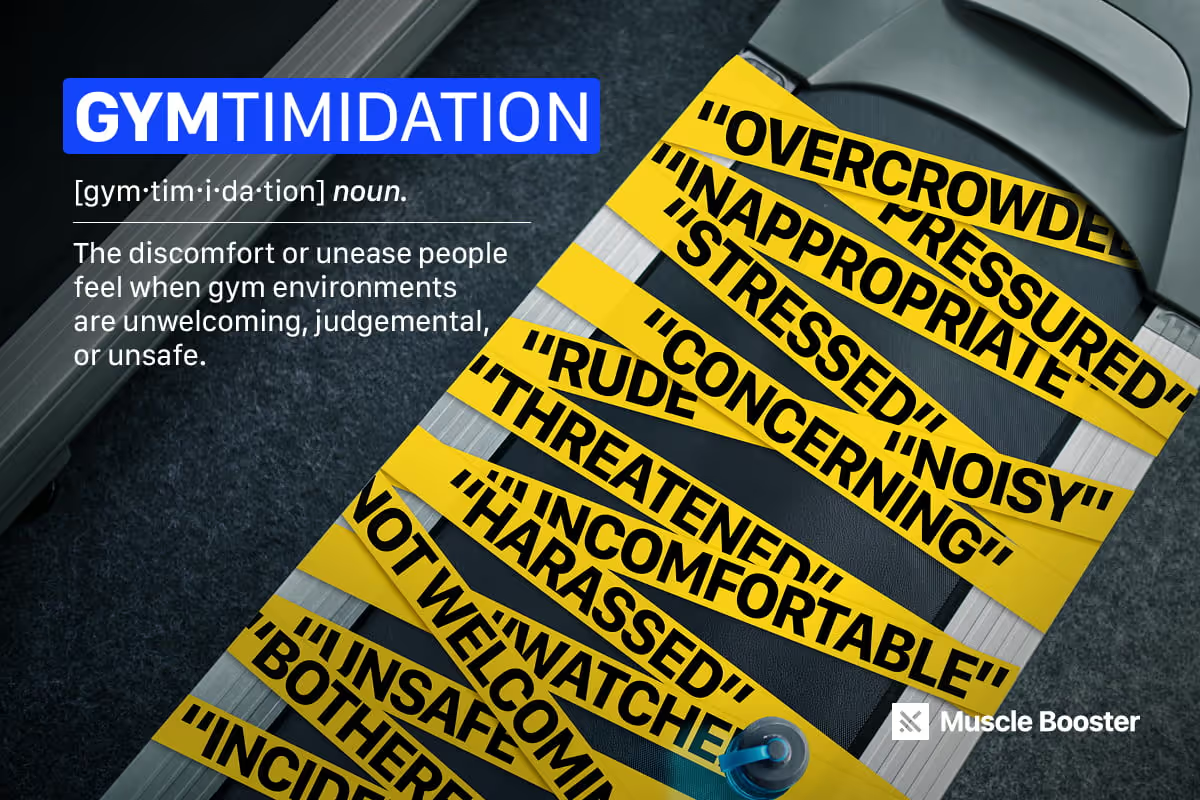
To understand how widespread Gymtimidation is, we analysed 157,469 online reviews from nine major UK gym chains, focusing on the 28,686 reviews rated 1–2 stars, to uncover what people's experiences are really like. Within these, we identified 9,770 mentions of terms linked to Gymtimidation, revealing how gym-goers describe feeling intimidated or unsafe in fitness spaces.
These terms reveal the behaviours, environments, and emotions that fuel Gymtimidation, showing that these experiences aren't isolated but instead common challenges that people face purely from wanting to exercise.
We were also able to uncover the terms that were commonly used by women as well as men to highlight how experiences in the gym vary for both genders.
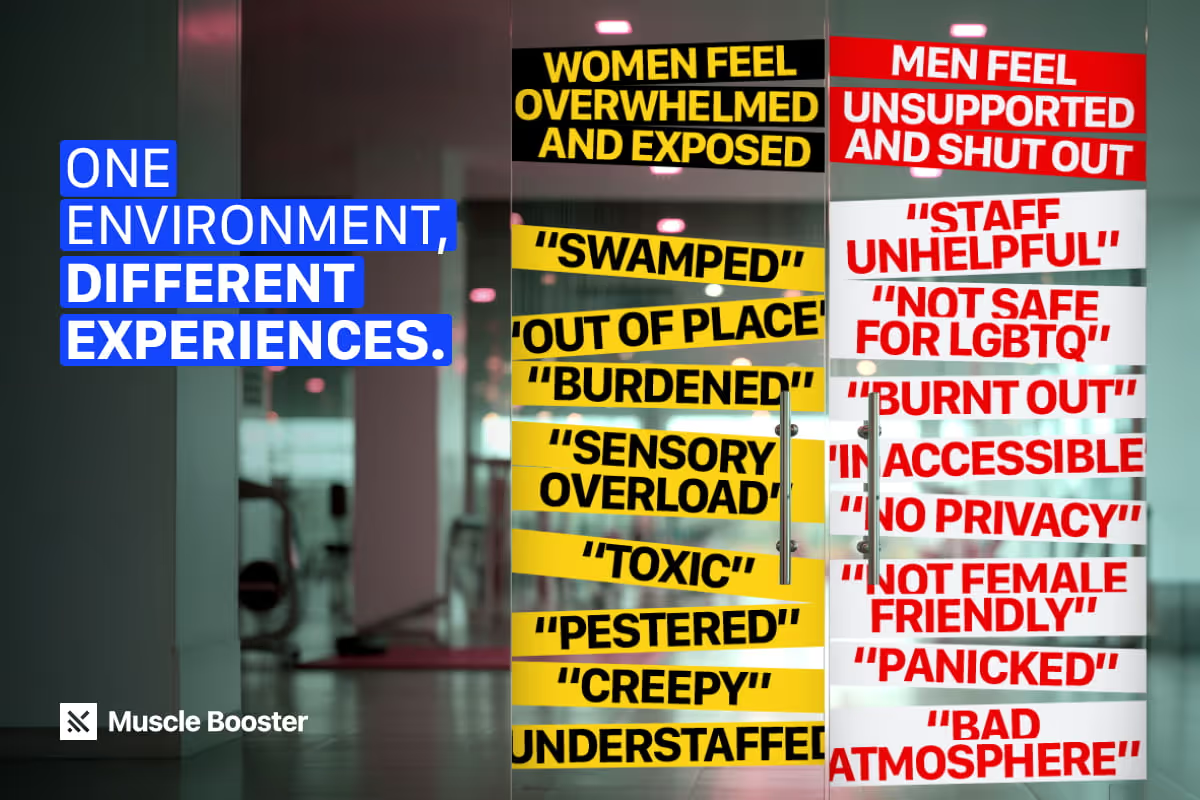
Women listed feeling swamped and out of place, as well as describing their environment as toxic, creepy and understaffed, whereas men felt panicked, burnt out, and reported a bad atmosphere with a lack of privacy.
Gymtimidation doesn't stem from a single cause, instead, it emerges from a combination of gym culture, the physical environment, and individual confidence, demonstrating how both the space itself and personal experiences shape feelings of intimidation, judgement, and anxiety.
The top factors contributing to gym intimidation in the UK were reported as:
These findings echo what experts call "anticipatory anxiety", the dread that builds before even setting foot inside a gym:
Meet the expert

David J. Sautter is a NASM-certified personal trainer and performance enhancement specialist. Besides practical experience as a personal trainer, David is also a fitness writer with experience in the fitness and nutrition industry, as well as a vast understanding of exercise science, nutritional research, and sports nutrition supplements.
Sautter explains: "I think a lot of gym anxiety comes down to fear of judgment. People walk in feeling like everyone is watching, critiquing their form, or comparing their bodies. For beginners, unfamiliarity with equipment can be a major hurdle, for example, if you're unsure how to adjust a machine or where to stand, the gym can feel intimidating, and it may seem like everyone is just waiting for you to move. The overall vibe of the gym matters too. If the space seems designed for one type of crowd, like hardcore lifters or people with a specific aesthetic, other members can easily feel like outsiders."
Gymtimidation is more than a fleeting feeling, it can significantly impact participation, causing many to skip workouts or leave the space prematurely. 39% of gym-goers report avoiding or leaving a gym due to discomfort, intimidation, or feeling out of place, with 21% of those doing so on multiple occasions.
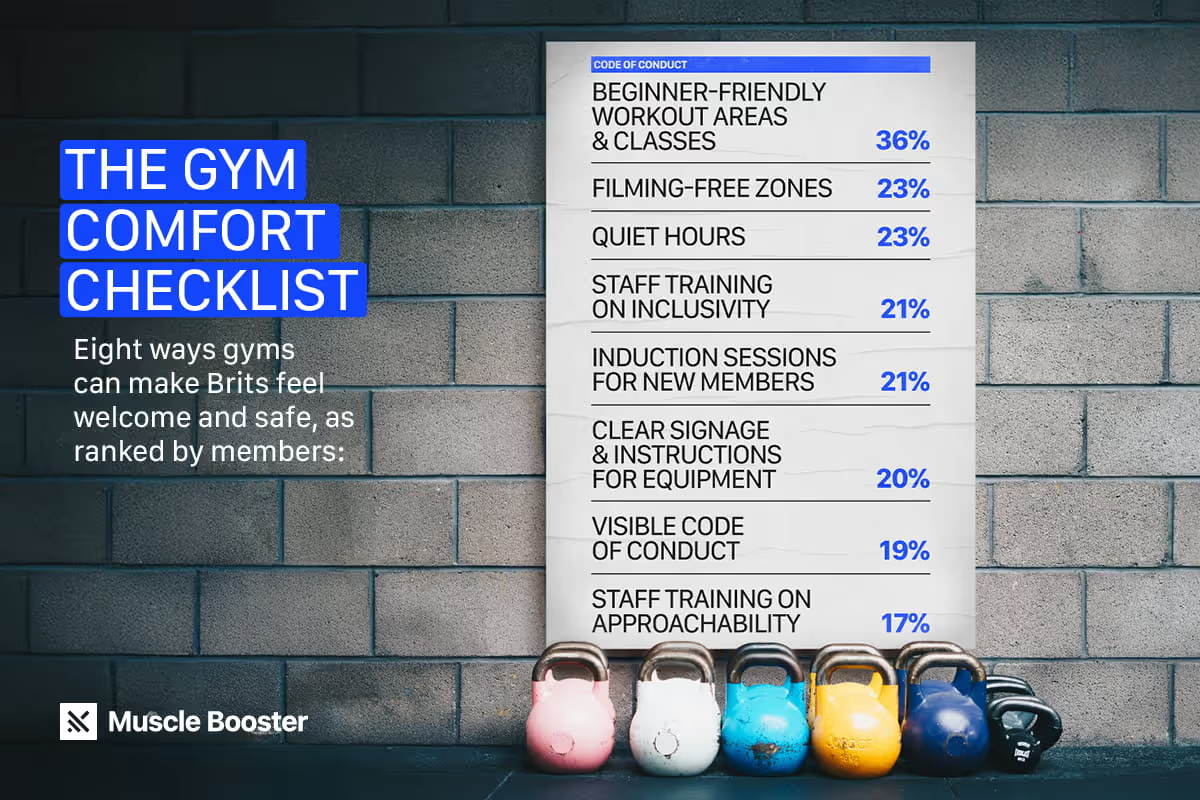
If feelings of intimidation and judgement are the problem, then striving for inclusivity shapes the solution. But what does an inclusive gym look like to those that visit?
42% of Brits said their gym is only somewhat inclusive but has room to improve, whereas one in seven (13%) said it wasn't welcoming or inclusive at all. When asked what would make them feel safer or more comfortable, respondents revealed that they wanted beginner friendly classes (36%), filming-free zones (23%), and quiet hours (23%), the most.
Dr. Jenkins notes that inclusivity starts with visibility: "Inclusive gyms make it easier for people from all backgrounds including beginners, older adults, individuals with larger bodies, people with disabilities, and LGBTQ+ members, to engage without fear of judgment. This approach shifts the focus from appearance and weight loss to functional goals like building strength, improving mobility, boosting energy, and supporting mood stability.
"When mental well-being and inclusivity are treated as core values rather than extras, gyms reduce the risk of body shaming, unrealistic expectations, and harassment, while fostering a healthier relationship with movement for everyone."
She explains: "For beginners, the key is to start with a plan that's short, simple, and repeatable, so that early workouts build confidence instead of overwhelm. A 20 minute 'confidence circuit' is a great example: begin with a five minute warm-up walk, then pick three beginner friendly machines, such as the leg press, chest press, and lat pulldown, and do two sets of eight to 12 reps on each. Keep the weight light enough that you could manage two to four additional reps if needed, just enough to challenge your muscles without risking strain.
"Another approach is to start in a neutral zone, such as a cardio area or stretching mat where you feel comfortable, and gradually add new exercises in nearby areas each week. For those who prefer predictability, low-intensity cardio, like walking or cycling at a pace where you can speak in full sentences, is a gentle way to build the habit of showing up. The goal isn't to master every machine or exercise right away, but to create a consistent pattern of small, achievable wins that steadily expand your comfort zone."
Our insight makes one thing clear: Gymtimidation is real, but it can be actively addressed and prevented. By creating spaces that prioritise respect, inclusivity, and support, gyms can transform the experience for every member. The result? Greater confidence, improved well-being, and the motivation to show up consistently, turning fitness into a space where everyone can thrive.
Survey
We commissioned a survey of 1,000 Brits who actively go to the gym or have visited one in the
past few years, conducted via TLF in October 2025.
Methodology
We compiled a list of nine popular gym chains across the UK and collected all their online reviews,
spanning 1–5 stars. From these, we identified a set of key terms associated with intimidation, judgment, and anxiety,
and cross-referenced them against the 1–2 star reviews. We then analysed this dataset to determine
the most frequently mentioned terms overall and examined how these keywords differed between women and men.
People around the world are getting stronger with Muscle Booster. Here’s what they say about the App.