
This is spectacular. I bought it with mistrust at first. Afterwards I started using it and I'm happy. I love it. I like the graphics, the way they talk to you. It motivates you. It's great, it's like a personal trainer at home.
★★★★★
The cities across Europe designed for movement and activity.

All-or-nothing thinking is common in exercise, as people believe they need to work out a certain way or for a certain length of time for it to count. But while many Europeans obsess over gym sessions and step counts, they may be overlooking one of the biggest contributors to physical activity: everyday life.
According to the World Health Organization, adults should aim for 150 minutes of moderate activity each week. While that's often interpreted as structured exercise, like going for a run, visiting the gym, or doing a designated home-based workout, our new research reveals that in some of Europe's major cities, infrastructure alone can help turn ordinary routines into meaningful movement.
We assessed which of Europe's most populated capital cities best support opportunities for incidental physical activity based on their infrastructure, to reveal the locations that are quietly building "everyday athletes" without residents going to the gym or stepping outside for a run.
Meet the expert

Dr. Cassidy Jenkins is a dedicated psychologist, writer, and educator with a passion for making mental health accessible and relatable. Holding a PhD in Clinical Psychology, she has spent years helping individuals navigate their mental health journeys through therapy, research, and education, with a focus on building confidence, resilience, and emotional well-being.
Dr. Cassidy Jenkins explains why everyday activities like walking to work, carrying the shopping, or taking the stairs, are often overlooked as forms of exercise that can positively contribute to our health:
She explains: "The body benefits from these movements, but the mind often fails to recognise them as progress, so they get labeled as chores or background activity instead of physical effort.
"People often undervalue everyday movement because of an effort illusion. Many of us have learned to equate value with visible effort. If something doesn't feel hard, structured, or clearly 'exercise-like', the brain tends to dismiss it, even when the body is still working. In other words, if it doesn't look or feel like a workout, we assume it doesn't count."
With many daily activities offering similar benefits to popular types of workouts, our research revealed which of Europe's major cities create the best environment for this, and are therefore giving residents the most opportunities to consider their everyday movements towards their health and fitness goals.
We analysed the 30 most populated European capital cities and ranked them based on their support for facilitating incidental physical activity and common daily movements:
To determine which locations are quietly building the most everyday athletes, we applied an evenly-scored indicator, to create an overall rating for each capital city out of 100.
The analysis revealed that Vienna (Austria), Madrid (Spain) and London (UK), are the best locations for quietly helping to create casual exercisers.
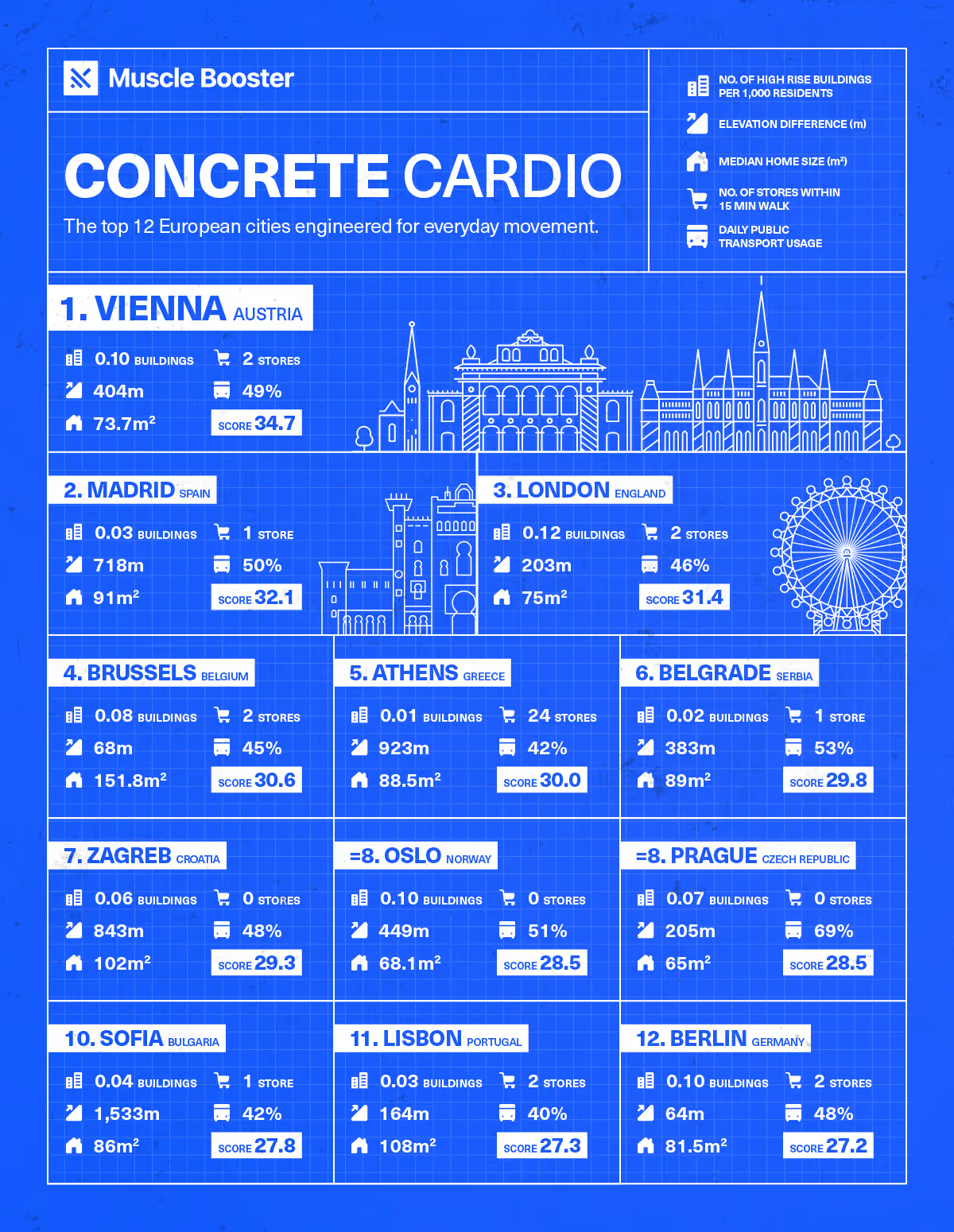
Austria's capital Vienna is the optimum location. Almost half (49%) of the population use public transport daily, which provides regular opportunities to improve circulation to the lower body, and boost balance and posture.
Vienna's median home size (73.7m²) means opportunities for household chores such as cleaning, vacuuming, and laundry are greater, having a more meaningful impact. These activities require the body to engage multiple muscle groups to make repeated low-intensity movements over a sustained period of time.
Madrid and London rank second and third respectively, due to scoring similarly highly in the same areas, with the capital of both Spain (50%) and the United Kingdom (46%) also seeing nearly half of the population use public transport on a daily basis.
In Madrid, there are significantly more opportunities for lower leg muscles to be put under greater strain within everyday activities, as average elevation difference (718m) and median home size (91m²) vastly exceed both Vienna and London.
Meanwhile, London's ranking of third, relates the UK capital having notably more opportunities for residents to use stairs (0.12 high-rise buildings per-thousand residents), alongside a high median home size (75m²).
Dr. Cassidy Jenkins comments on why those living in Vienna, Madrid and London, may not realise that they are living in the best locations for daily activities to contribute towards their overall health and fitness goals:
"Familiarity plays a role. When movement becomes routine, it fades into the background of awareness. The brain is efficient and stops paying attention to repeated behaviors that don't feel novel or demanding.
"That's why walking the same route every day or doing household tasks is easy to overlook, even though those movements contribute meaningfully to overall fitness. These factors narrow how people define exercise and lead them to underestimate the value of everyday movement, even though it plays a powerful role in long-term health."
Due to their regularity, common activities such as walking up stairs and hills, carrying shopping, cleaning the home, and even standing on public transport, can combine to burn calories on a par with a number of popular exercises.
By analysing the energy cost of physical activities relative to resting metabolic rate (MET value), we were able to understand how different daily movements compare to traditional workout exercises.
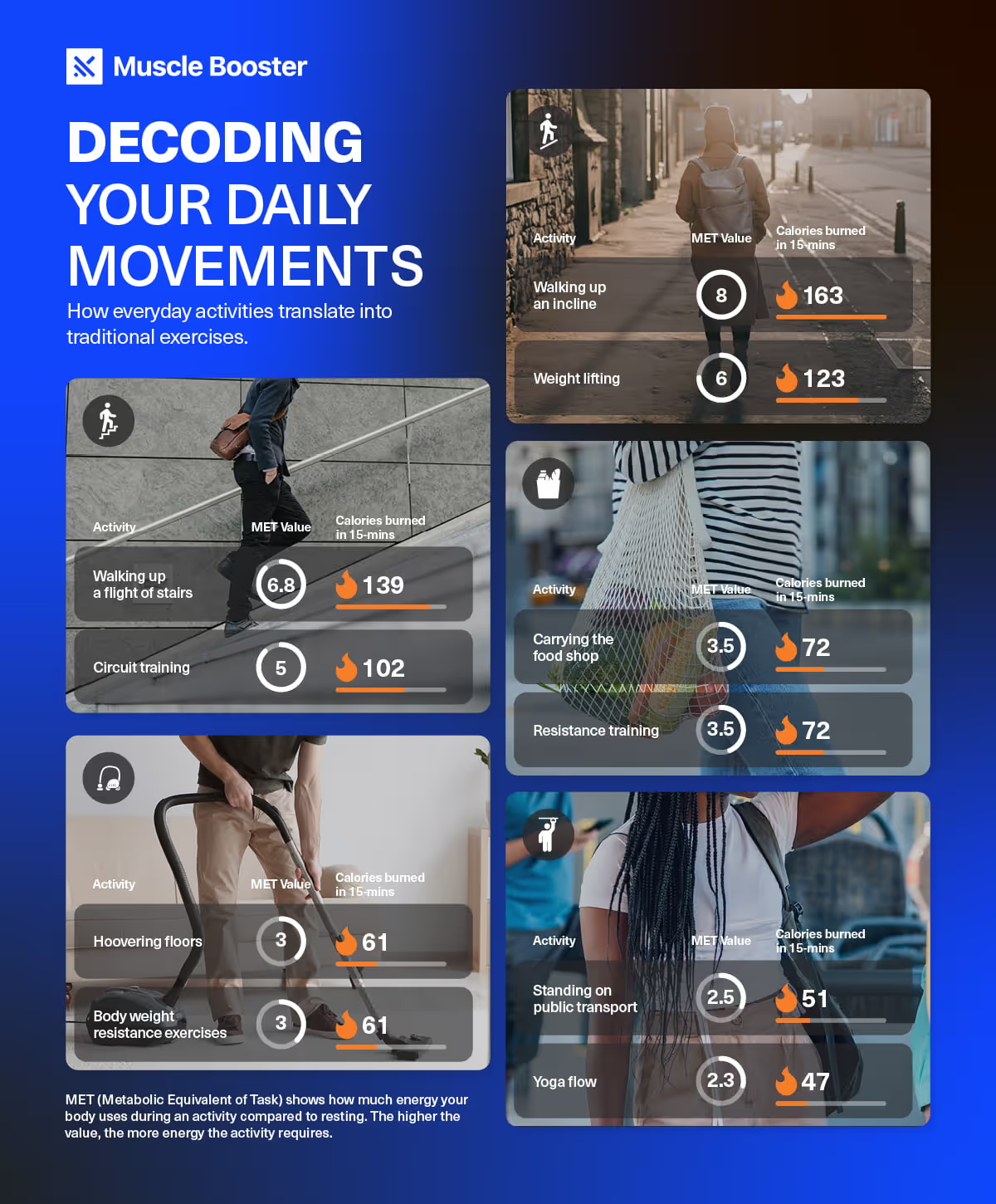
For example, the MET value of walking up a flight of stairs (6.8) can be higher than gym-based activities such as weightlifting (6), circuit training (5).
Hoovering floors (3) and making the bed (3) can be as valuable as body weight resistant exercises (3), and carrying shopping home (3.5) can be of similar value to resistance training (3.5).
Meet the expert

Bruno Pontes is an ACSM and AFAA-certified personal trainer and group exercise instructor. For the past eight years, he has dedicated himself to helping individuals on their fitness journeys. He believes that fitness is for life and that movement is medicine. Bruno strives to make every workout fun, challenging, and purposeful, tailored to each person’s unique needs and goals.
Bruno explains: "METS allow us to understand what our daily lives may look like in terms of burning calories. Some people may not feel as if they worked out because they haven't been to a gym that day, but a lot of that has been due to societal pressures. Even just taking a walk can be an effective form of exercise or movement."
Through a comprehensive analysis of each activity, we calculated how the calories burned during these everyday tasks and movements compared to traditional workout exercises.
Bruno also explains how they can also support circulation, joint health, muscle strength, and even boost overall endurance:
Walking up the stairs or slope: Our analysis found that for the average individual, walking up an incline for 15-minutes can burn 139 calories, more than the approximate 102 burned during a circuit training session that lasts for the same amount of time.
Bruno explains: "When taking the stairs or walking on a slope, engaged muscles are able to build strength without enforced joint stress or high impact. Key muscles such as the hamstrings, glutes and quads are all put to work through these functional activities, which in the long-term can subtly support strength building, endurance and in some cases, even help prevent injury."
Home-based chores: Looking at the comparisons for these activities, 15-minutes of hoovering the floors burns an average of 61 calories, the equivalent to 15-minutes of body weight resistance exercises such as squats, lunges, or push-ups.
Bruno explains: "Chores such as cleaning, vacuuming, and making the bed are also examples of functional exercise, as the body engages multiple key muscle groups, including the lower-back and shoulders.
"Home-based chores force the body to make a variety of movements; including lifting, pushing and pulling. By continually repeating these low-intensity movements over a short period of time, muscles throughout the arm and back can build greater endurance and increase grip strength."
Carrying shopping: Similarly, carrying the shopping and resistance training exercises such as bicep curls and chest presses, both burn 72 calories over a 15 minute period.
Bruno explains: "Carrying the shopping can be considered one of the ultimate functional strength activities, as well as having cardiovascular benefits dependent on the distance.
"This everyday activity brings together a variety of key muscle groups, including the legs, back, shoulders, arms, and core. By involving weight, the heart rate can be raised, and there is also the opportunity over time to maintain bone density and muscle strength through lifting bags of groceries.
"The carrying of bags will also support grip strength, providing a workout to smaller muscles within the lower arm and hand."
Standing on public transport: Our analysis also found that standing for 15 minutes on public transport burns 51 calories, slightly more than the 47 burned during yoga flow.
Bruno explains: "Choosing to stand instead of sitting on public transport may seem like a hassle, but the decision can come with some health benefits, particularly if you have been sitting for long periods throughout the day.
"By standing you are able to improve circulation to the legs and feet, alongside further supporting your core muscles, which help with balance and posture. These benefits can be heightened further by wearing a bag on your back."
This research points to one simple truth: movement is already built into your day. The opportunity to improve your physical and mental health isn't out of reach, it can be inside your home or just outside your door. Small, consistent actions, adapted to your needs, pace, and abilities, add up. And when they do, becoming an everyday athlete is possible for everyone, in their own way.
Sources:
Methodology:
This study ranked the 30 most populous European capital cities by their support for incidental physical activity using five evenly scored indicators to create a final 'everyday athlete' score out of 100. Any countries that the FCDO advise against visiting have been removed:
Using the Compendium of Physical Activities, we calculated energy expenditure for non-exercise tasks versus traditional workouts. Results represent calories burned per 15-minutes for an adult of average European weight (mean of male/female). The standard formula was used, and the calculation utilises the given MET score (task intensity), the standard oxygen consumption rate (3.5 ml/kg/min), and a conversion factor of 200 to derive caloric burn.
People around the world are getting stronger with Muscle Booster. Here’s what they say about the App.