Lower back pain is often blamed on glute workouts. So much so that many people avoid training their glutes altogether.
Skipping leg day might feel “safe,” but in reality, it’s one of the fastest ways to keep your back problems alive.
Weak glutes are one of the biggest culprits behind lower back pain.
When they’re not pulling their weight, your spine is forced to pick up the slack and that’s when discomfort turns into chronic issues.
Not all glute exercises are off-limits.
In fact, the right ones can do more than build muscle. They can reduce pain, restore balance, and protect your back for the long haul.
This guide will show you seven moves that build strong glutes without wrecking your lower back.
Why You Shouldn’t Skip Glute Training With Lower Back Pain
It might feel counterintuitive to train the muscles you associate with pain, but in many cases, weak glutes are a hidden contributor to lower back pain.
When your backside isn't pulling its weight, your lower back muscles end up doing too much, and that imbalance takes its toll.
The glutes, especially the gluteus maximus, medius, and minimus, are foundational muscles in your body's posterior chain.
These muscles don’t just contribute to strength and aesthetics: they play a central role in stabilizing your hips and aligning your pelvis and spine.
This is where the vicious cycle begins: weak glutes lead to overcompensation, which results in fatigue and tension in the lower back.
Since pain often causes people to become more sedentary, the glutes weaken further, reinforcing that same imbalance.
It is, however, important to strengthen your glutes, as they contribute significantly to your back’s wellbeing.
They stabilize the pelvis, preventing excessive tilting that can stress the spine.
They reduce compensation from the lumbar spine, especially during hip extension movements.
They support posture, making standing and walking more efficient and less painful.
The goal, then, isn’t to avoid movement but to choose the right movements for you. Using targeted, back-safe glute exercises, you can rebuild strength and break the pain loop.
7 Glute Exercises That Don’t Hurt Lower Back
You don’t need to sacrifice your back to build stronger glutes.
With the right exercises, you can activate and strengthen your glute muscles while keeping your spine supported and pain-free.
Here are seven glute exercises that are both back-friendly and highly effective:
1. Glute Bridge

A go-to for beginners, the glute bridge activates the glutes without stressing the lower back. It builds hip strength and supports pelvic stability, key for relieving back strain.
How to Do It:
Lie on your back, knees bent, feet hip-width apart.
Press through your heels, squeeze your glutes, and lift your hips until your body forms a straight line from shoulders to knees.
Lower slowly to the starting position.
Optional Props: resistance band (above knees).
Tip: Focus on glute squeeze at the top, not lower back arch.
2. Single Leg Bridge

This variation challenges stability and balance, activating the glutes and hamstrings more intensely, all while keeping pressure off the lower back.
How to Do It:
Lie on your back, one knee bent and foot flat, the other leg extended.
Using your grounded heel, press up and lift your hips.
Once at the top, squeeze the glutes and then slowly lower with control. Switch sides.
Optional Props: mat for support; resistance band above knees for added challenge.
Tip: Keep hips level, don’t let the lifted leg side drop.
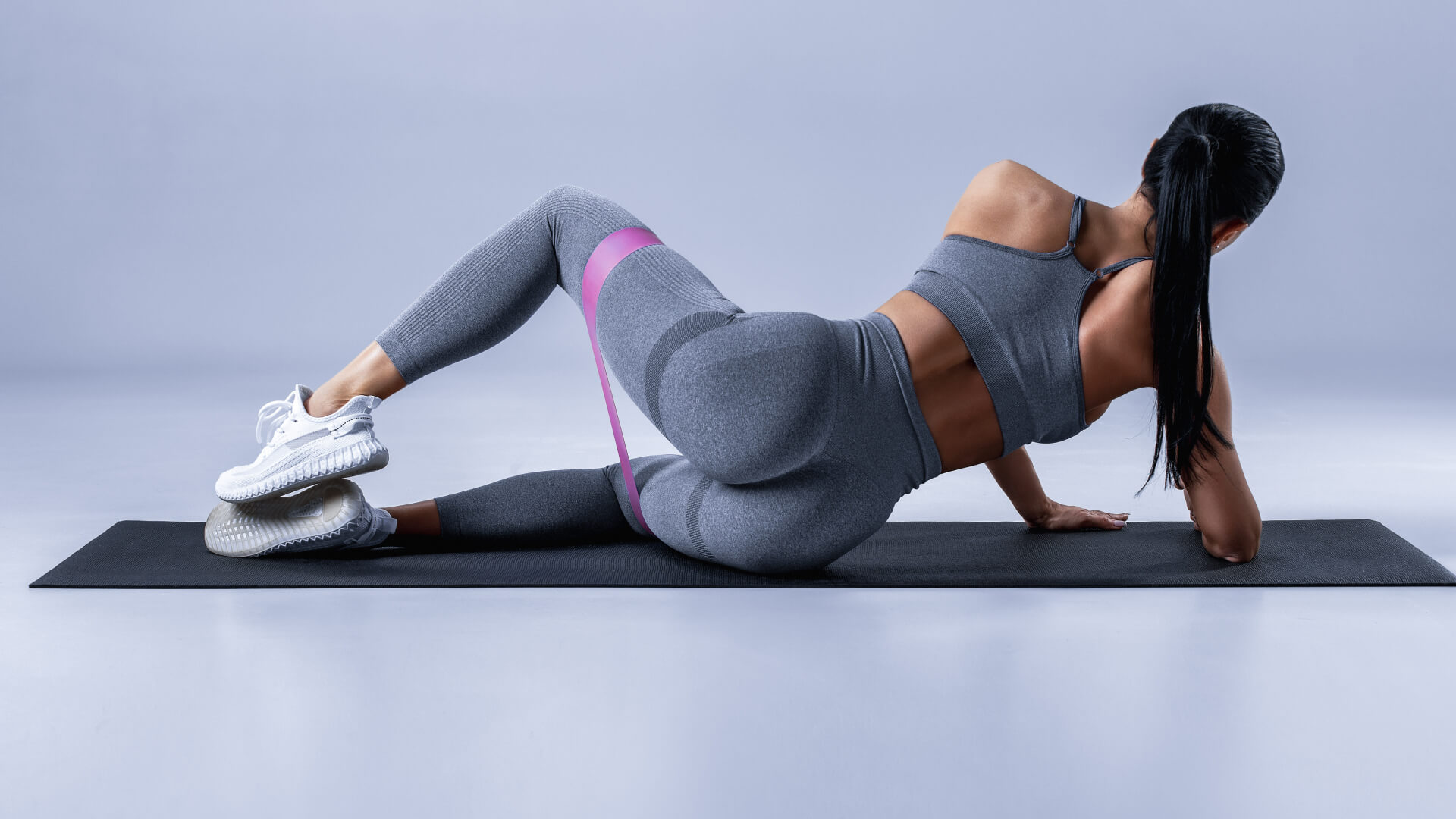
3. Banded Clams

A small but mighty move, banded clams activate the gluteus medius, a key muscle for hip stability and lower back relief.
They’re also one of the best side glute exercises to include in warm-ups or targeted glute work.
How to Do It:
Lie on your side, knees bent, resistance band above the knees.
While opening the top knee, keep your feet together, and squeeze the glutes.
Control the return.
Repeat, then switch sides.
Optional Props: resistance band (light to medium).
Tip: Avoid rocking the hips, isolate the movement at the hip joint.
4. Reverse Lunge

The reverse lunge strengthens glutes and legs while reducing pressure on the knees and spine, making it a smart choice for those with lower back sensitivity.
How to Do It:
From standing, step one foot back and lower into a lunge until both knees are bent at about 90°.
Keep your torso upright and push through the front heel to return.
Alternate sides.
Optional Props: resistance bands or light dumbbells once you’ve nailed the form.
Tip: Keep hips square and movement controlled. Avoid leaning forward.
5. Dumbbell Bulgarian Squat

This advanced move targets glutes and quads while improving balance and posture, with minimal spinal load. It’s ideal for building single-leg strength without straining the lower back.
This is one of many great dumbbell glute exercises that increase strength while keeping the spine safe.
How to Do It:
Stand about two feet in front of a bench or sturdy box, holding a dumbbell in each hand at your sides.
Place the top of your back foot on the bench, keeping your front foot planted firmly on the floor.
Engage your core and keep your chest upright as you slowly bend your front knee, lowering your hips straight down.
Continue until your front thigh is parallel to the ground or as low as comfortable.
Optional Props: bench or box; dumbbells for resistance.
Tip: Maintain a tall torso and straight, engaged core to avoid arching your lower back.
6. Band Deadlift

This deadlift variation builds glute and hamstring strength while minimizing back strain, thanks to the controlled resistance and upright posture.
How to Do It:
Stand on a resistance band, feet hip-width apart.
Hold the handles or loop, hinge at the hips with a flat back, and push through your heels to return to standing.
Squeeze your glutes at the top.
Optional Props: resistance band, mat.
Tip: Keep your spine neutral and shoulders back — the motion should come from your hips, not your back.
7. Single-Leg Deadlift

This unilateral move strengthens the glutes and hamstrings while challenging balance and core control, all with low back strain when done with care.
How to Do It:
Stand tall, then hinge at the hips while extending one leg straight behind you.
Keep your back flat as your torso lowers and your hand reaches toward the floor.
Return with control. Switch legs.
Optional Props: light dumbbell or kettlebell.
Tip: Keep hips square and the lifted leg in line with your torso.
Your Back-Safe Glute Workout Plan
If you’re looking for a simple, structured way to get started, the following sample plan includes effective, back-friendly glute exercises, all detailed separately.
It’s designed to gradually build strength, stability, and mobility with clear room for progression.
These workouts still aim at activating your glutes without putting your lower back under strain, but part of that success comes from progressing at a sensible, focused speed.
Sample Workout Plan | |||
Exercise | Reps | Sets | Rest |
Glute Bridge / Single Leg Lift | 12–15 | 3 | 45 seconds |
Reverse Lunge (Bodyweight or Band) | 10–12 | 2 | 60 seconds |
Band Deadlift / Single-Leg Variation | 8–10 | 2 | 60 seconds |
Banded Clams | 8–10 | 3 | 90 seconds |
Dumbbell Bulgarian Squat | 6–8 | 2 | 90 seconds |
Warm-Up Suggestions (5–7 minutes):
gentle glute activation: bodyweight bridges or bird dogs
dynamic movements: hip circles, leg swings, gentle lunges
Cool-Down Ideas:
child’s pose
hip flexor stretch
glute stretch (seated or lying)
Bottom Line
If you’re dealing with lower back pain, avoiding glute training might feel like the safe move, but it's actually a step in the wrong direction.
Your glutes are meant to stabilize and support your entire posterior chain. That means when your glutes are weak or inactive, your lower back takes the hit.
To build effective strength in your glutes, choose the right movements for you, and do them with intention.
Back-safe glute exercises not only strengthen your backside: they improve posture, reduce strain, and can even help resolve existing pain over time.