Dive into this article to understand the essential role of drinking water during a workout.
Water makes up around 60% of our body, so staying hydrated is essential for maintaining good health. But it’s also important if you want to achieve your fitness goals.
In this article, we’ll explore the significance of drinking water during your workout.
We aim to shed light on why it’s a fundamental component of fitness and provide guidance on the appropriate amount to consume to ensure both peak performance and overall health.
Hydration & Physical Activity
Many people refrain from drinking while working out due to the fear of feeling bloated or negatively affecting their fitness performance.
You’re in the right place if you’ve ever wondered, “Should I drink water during my workout?”
Most people know that water is involved in our body’s thermoregulation to prevent it from overheating, but it also supports the following:
Muscle contraction
Removal of toxins and other waste material from our system
Delivery and absorption of oxygen and nutrients to the muscle tissues
Lubrication of the joints
How Dehydration Affects Your Performance
As already mentioned, being dehydrated can also significantly affect your fitness performance.
If you don’t drink enough water and don’t sustain favorable levels of hydration when training, you might experience simple or serious side effects. For example, you may get dry lips and a dry mouth, but in the worst cases, your focus may decrease, and you might feel fatigued and lightheaded.
So, Is Drinking Water During a Workout Good Or Bad?
Drinking water while working out is definitely good as it allows you to sustain your body to perform all its functions effectively, such as the delivery of nutrients to the different tissues and organs.
This means drinking water during a workout is a good habit as it helps you sustain your health and athletic performance.
How Much Water Should You Drink During Workout?
Below, you’ll find the general hydration recommendations for physical activity as per the American Council on Exercise guidelines. [5]
You should drink 17-20 ounces (appx. 500ml) of water before your workout to ensure you are well hydrated, support your performance, and allow proper delivery of oxygen and nutrients to your muscles.
You should also be drinking water during workouts to replenish the fluids lost through sweating and prevent feeling dizzy and lightheaded. Aim to drink 7-10 ounces (appx. 250ml) of water during your workout, especially if fairly long and intense or if you are training in a hot environment.
Finally, drinking water after a workout is really important to replenish the fluids lost during physical activity. To rehydrate yourself, drink between 16 to 24 ounces of water or fluids for each pound of body weight lost during the workout.
You would need to know your initial weight first, then reassess it after your exercise session to find out the amount of fluid lost and calculate your hydration needs. You can make the calculations once for each type of workout you do.
Factors Influencing Water Intake
The amount of water one should drink during a workout depends on a wide range of factors, including the length and intensity of the workout, the environmental conditions, individual sweat rate, as well as the age and gender of the person.
General Guidelines for Hydration
As a general note, the guidelines suggest drinking between six to eight cups of water a day to stay hydrated, although individual requirements vary based on the factors mentioned in the previous section. [6]
Signs You’re Not Drinking Enough Water
Being able to recognize the signs of dehydration can help you regulate and adjust your water intake during a workout to maintain adequate hydration levels.
Below, you can find the main signs of dehydration:
Dry lips, eyes, and mouth
Extreme thirst
Headache and migraines
Fatigue and tiredness
Dizziness
Nausea
Lack of focus
What To Drink During A Workout
After discussing the benefits of keeping hydrated during your workout, you may now wonder, “What exactly should I drink during my workout?”
Drinking fluids is essential to stay hydrated. However, not all drinks hydrate the same.
In fact, in some cases, drinks can even dehydrate you, as it happens with alcohol or high caffeine intake. [8]
Here’s what to drink during your workout to stay hydrated and what not to drink while working out if you want to prevent affecting your performance or hurting yourself.

Drink this:
Plain water
Water with added amino acids (either sold as a ready-to-drink solution or as powders/tablets to add to your drink)
Sports drinks
Coconut water
Don’t drink this:
Carbonated drinks, including water
Energy drinks
Sugary drinks
Alcohol
Is It Better To Drink Water During A Workout Or After?
It’s essential to drink water both during and after a workout, meaning that there is no one best time to hydrate yourself.
Here are some guidelines on how to distribute water intake during and after your workout to keep well-hydrated.
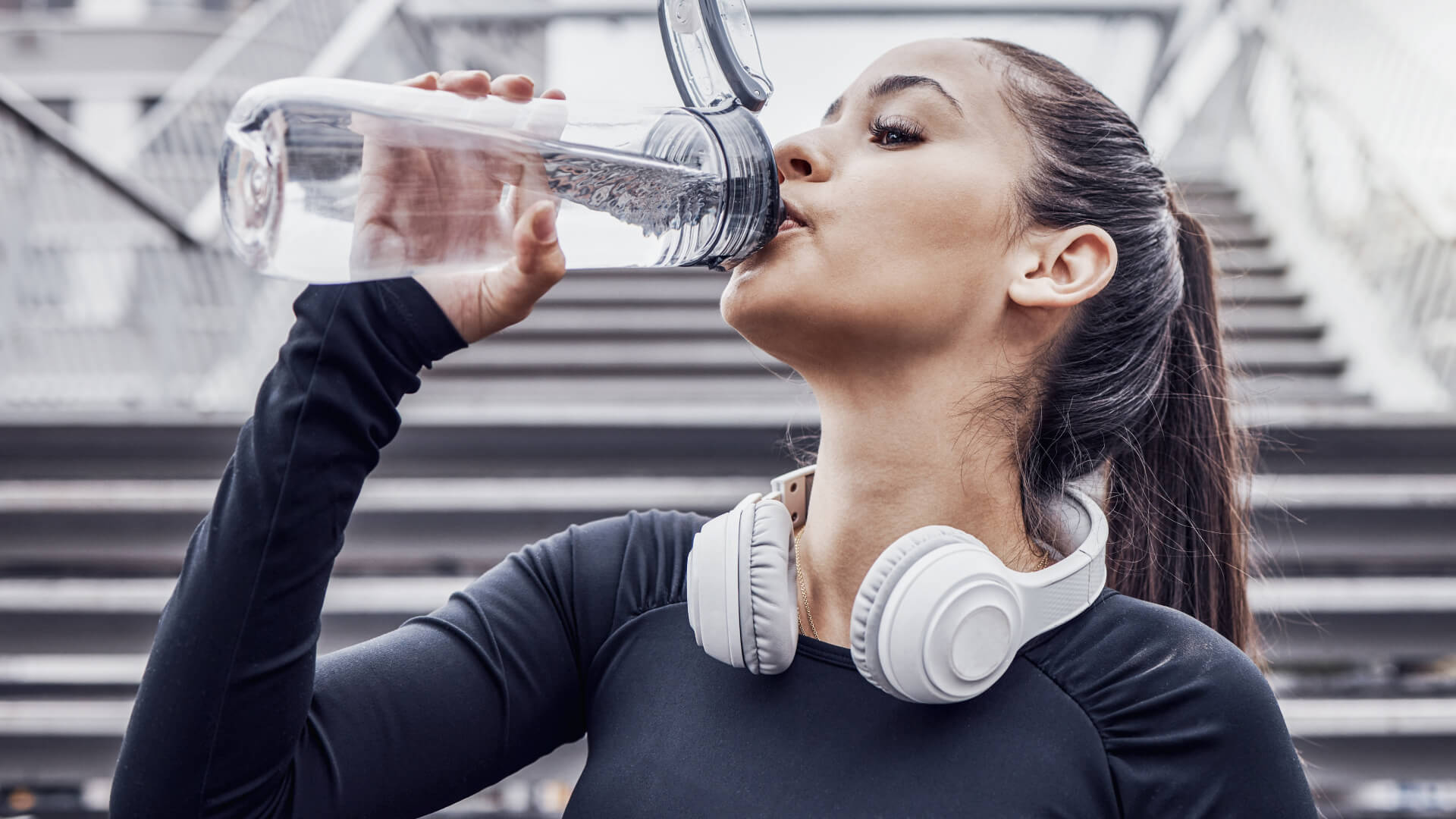
During exercise, drink small sips of water every 15 to 20 minutes, especially in longer workouts or when you’re sweating a lot. Drinking small, regular amounts of water also prevents you from feeling bloated and uncomfortable during your workout.
After exercise, carry on drinking water regularly based on the amount of weight lost during your workout to replace any remaining fluid deficit. Aim to rehydrate gradually over the next few hours to keep hydrated throughout the rest of the day.
You can also modulate water and fluid intake based on your current hydration levels, which can be easily assessed by checking your urine. Here is how you can assess hydration levels from your urine:
Color: Light, pale yellow urine usually indicates good hydration. Dark yellow or amber urine suggests dehydration. If your urine is dark, you should start drinking water immediately to rehydrate.
Odor: Normally, urine should not have a strong smell. A strong, concentrated odor, especially if combined with a dark color, can indicate dehydration.
Remember, individual hydration needs can vary, so listen to your body and adjust water intake accordingly to stay properly hydrated during and after your workouts.
Bottom Line
Drinking water is essential to sustain many physiological processes, especially if you are physically active. Here are the key points about hydration and water intake during exercise:
Drinking water during your workout is safe and is actually needed to prevent dehydration and its side effects, such as headaches, nausea, dizziness, fatigue, and dry lips, eyes, and mouth.
Water is involved in many biological processes, such as thermoregulation, toxins removal, muscle contraction, joint lubrication and delivery and absorption of oxygen and nutrients.
You should drink before, during, and after your workout to maintain good hydration levels, sustain fitness performance, and prevent injuries.
During your workout, aim to have water-based drinks enriched with salts and electrolytes to further aid hydration, and try to avoid drinks that might dehydrate you or affect your health.
You should hydrate yourself during your workout through small, regular sips of water, so as to also avoid feeling bloated and uncomfortable while training.
Checking your urine color and odor is a quick and effective way to assess your hydration status throughout the day and modulate fluid intake accordingly.