
This is spectacular. I bought it with mistrust at first. Afterwards I started using it and I'm happy. I love it. I like the graphics, the way they talk to you. It motivates you. It's great, it's like a personal trainer at home.
★★★★★
Have Brits taken self-optimisation too far?

From sleepmaxxing to looksmaxxing, Britain is experiencing a self-optimisation boom.
What began as niche online slang has evolved into a mainstream mindset, with people seeking to maximise everything from their appearance and fitness to their sleep, productivity, and wellbeing in pursuit of becoming the best version of themselves.
But as the pressure to improve intensifies, where is the line between healthy self-development and harmful self-optimisation?
To find out, we explored the rise of Britain's 'maxxing' culture, uncovering the trends driving millions of searches and exploring the physical and psychological impact of constantly striving for more.
In simple terms, 'maxxing' refers to the practice of maximising a specific area of your life, typically to the extreme. The term is usually added as a suffix, giving rise to trends such as looksmaxxing, sleepmaxxing, gymmaxxing, and frictionmaxxing.
Unlike traditional self-improvement approaches, 'maxxing' culture treats optimisation as a continuous pursuit. Rather than focusing on gradual progress, it encourages people to seek the maximum possible benefit from a specific behaviour, habit, or trait.
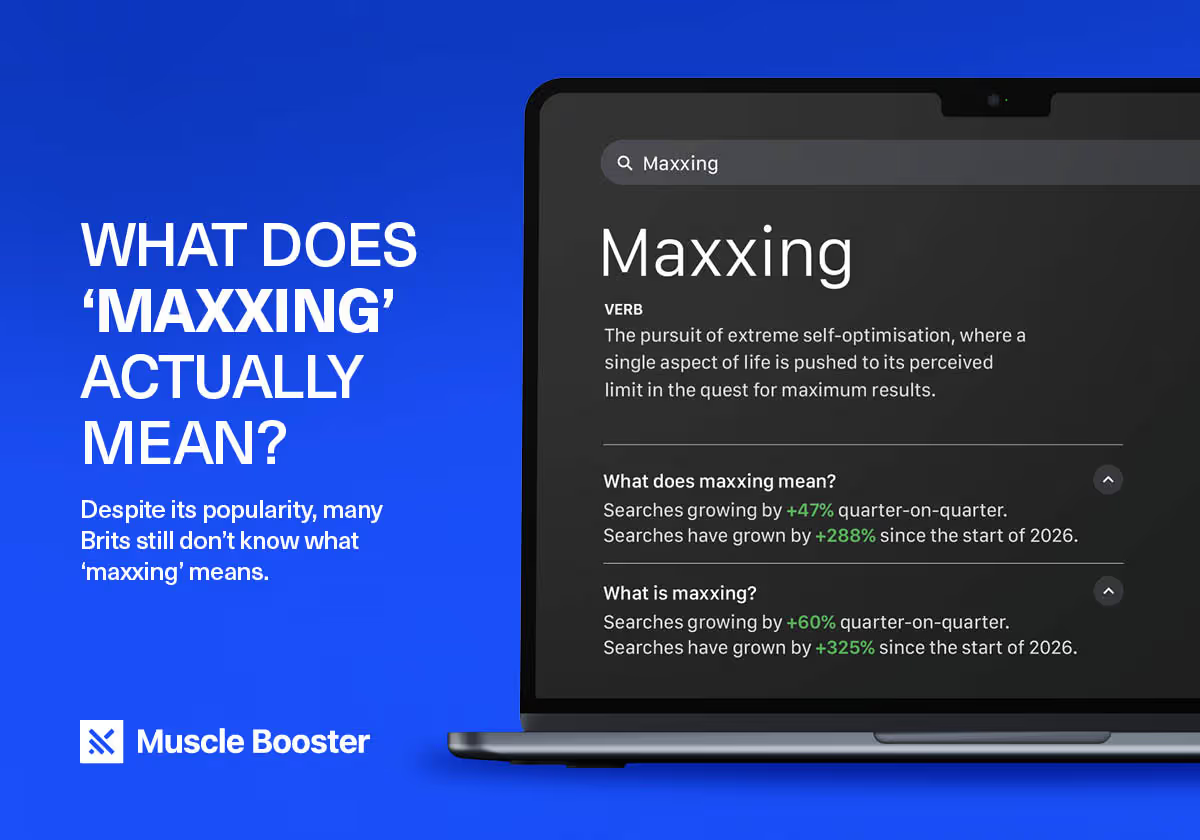
Search data suggests the concept is rapidly entering the mainstream. Since the start of 2026, searches for 'what is maxxing' have risen by 325%, while searches for 'what does maxxing mean' have grown by 288%.
This surge in interest indicates that a term once confined to online communities is now attracting broader public attention as people seek to understand, and potentially adopt, the latest 'maxxing' trends.
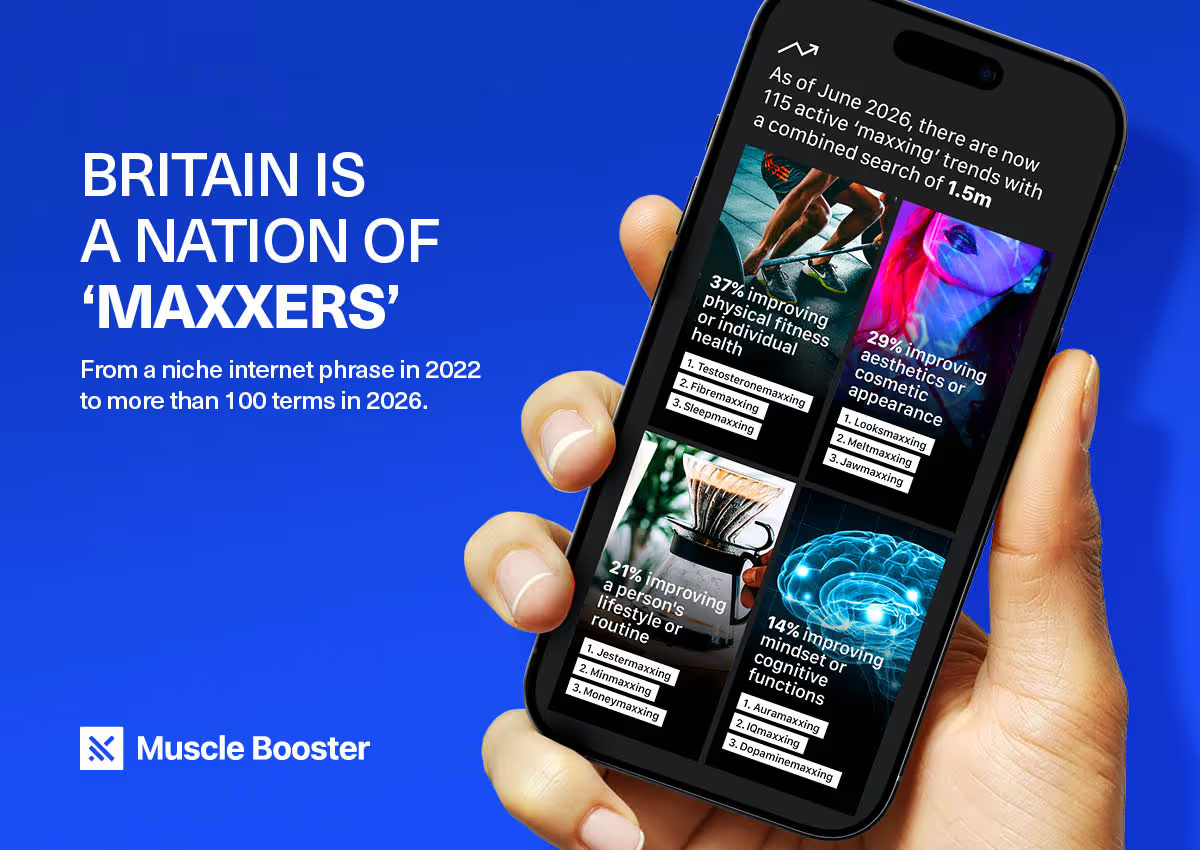
What began with a single 'maxxing' term in early 2022 has evolved into a much larger phenomenon. As of June 2026, we identified 115 active 'maxxing' trends, which have collectively generated almost 1.5 million UK searches since 2022.
To better understand these trends, we've grouped them into four core categories:
Meet the expert

Bruno Pontes, an ACSM and AFAA-certified personal trainer and group exercise instructor. For the past eight years, he has dedicated himself to helping individuals on their fitness journeys. He believes that fitness is for life and that movement is medicine. Bruno strives to make every workout fun, challenging, and purposeful, tailored to each person's unique needs and goals.
Pontes explains how growing interest in 'maxxing' trends may be influencing the products people search for online and the potential consequences:
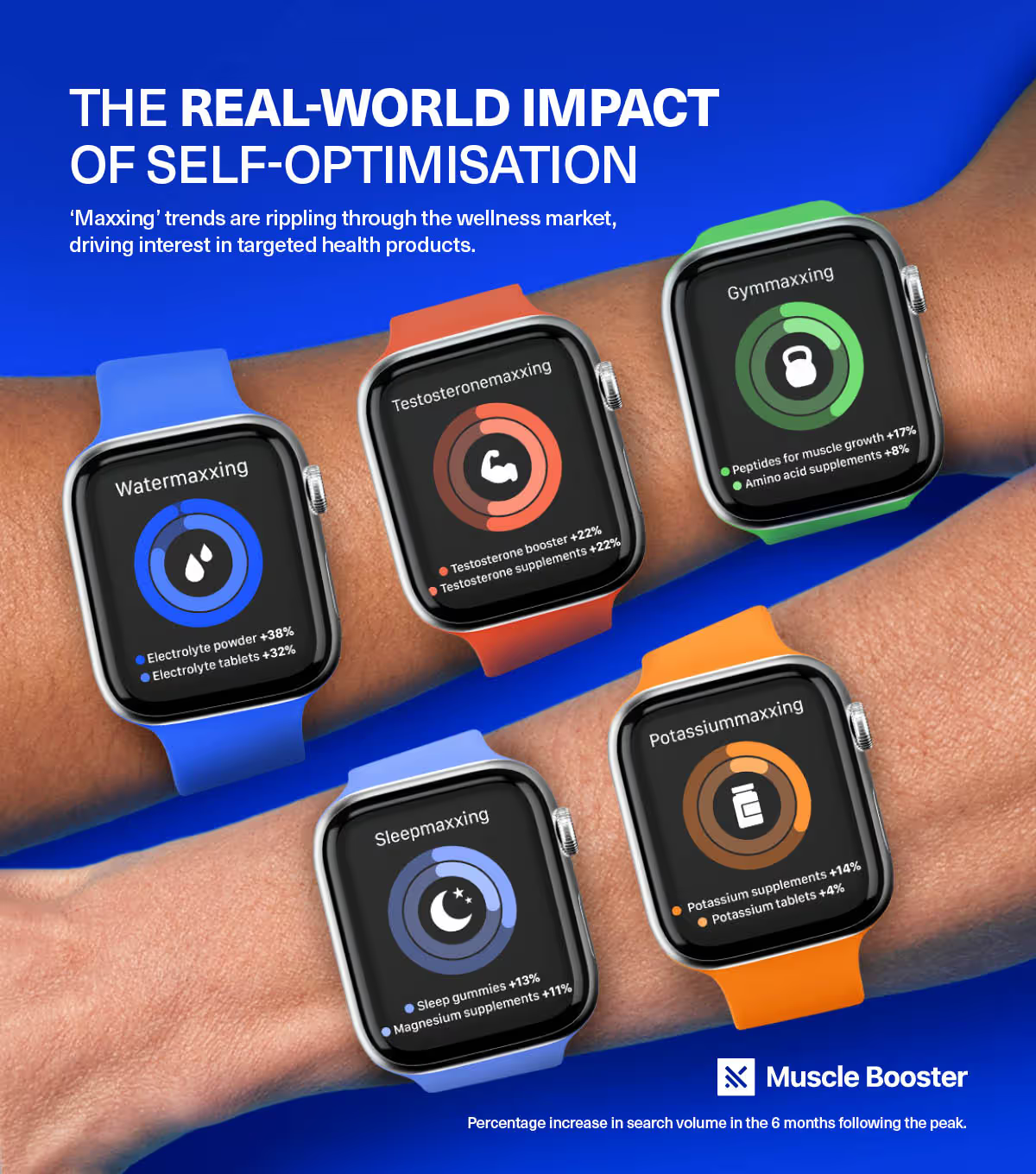
"As searches for 'maxxing' trends continue to grow, we are also seeing a ripple effect for their associated supplements. In many cases, people may spend money on products they don't necessarily need in the hope of improving a specific aspect of their health, fitness, or wellbeing.
"The foundations of good health remain relatively simple: a balanced diet, good quality sleep, and regular exercise are a much more effective approach to a healthy lifestyle than turning to supplements for optimisation if they aren't needed.
"Six months after the peak of 'gymmaxxing', searches for 'peptides for muscle growth' increased by 17%, suggesting that growing interest in fitness optimisation may also be driving curiosity around performance-related supplements. While some supplements may offer benefits, the challenge is that many consumers are exposed to information online without fully understanding whether a product is appropriate or right for their individual needs.
"The same can be seen across other health-focused 'maxxing' trends. Searches for 'potassium supplements' rose by 14% in the six months following the peak of 'potassiummaxxing', but unlike other vitamins, excessive intake of potassium can impact heart rhythms, especially for those taking other forms of medication. This is why it's important to seek professional advice before introducing new supplements into your routine.
"Similarly, following the trend of 'watermaxxing', searches for 'electrolyte powder' spiked by 38% six months later. Electrolyte products can be beneficial for those carrying out endurance training like long-distance running, but day-to-day overconsumption of electrolytes can increase intake of sodium without providing any health benefits."
Meet the expert

Dr. Cassidy Jenkins. PhD, is a dedicated psychologist, writer, and educator with a passion for making mental health accessible and relatable. Holding a PhD in Clinical Psychology, she has spent years helping individuals navigate their mental health journeys through therapy, research, and education, with a focus on building confidence, resilience, and emotional well-being.
Dr. Jenkins explains why optimisation culture can be so appealing and where the pursuit of self-improvement risks becoming self-pressure:
"People are often drawn to the idea of 'maxxing' themselves because, at its core, it promises something very human: perceived control over something."
However, Dr. Jenkins warns that the pursuit of self-improvement can become harmful when it is tied too closely to a person's sense of self-worth.
"The concern is when self-improvement becomes extreme, rigid, or tied too closely to how we value ourselves. Healthy routines can absolutely support mental and physical wellbeing, but when the person starts believing they have to optimise everything about themselves, the behaviour crosses the boundary into psychological harm.
"The constant need to feel you have to improve is emotionally exhausting, leading to burnout and often worsened mental health when the individual can't maintain whatever they're 'maxxing'.
"Social media helps propel these trends to new heights, making it easier than ever for people to compare themselves in every form to what they see online and constantly feel the need to attain those standards. Algorithms can create an echo chamber, making this culture feel like the dominant reality, further fuelling a need to keep up with others."
While many 'maxxing' trends are rooted in positive intentions, the growing pressure to optimise every aspect of life raises questions about where self-improvement ends, and self-pressure begins.
As the self-optimisation era continues to rise, Muscle Booster has created the 'anti-maxxer' manifesto, a set of principles designed to encourage a more balanced, sustainable approach to health and wellbeing.
A healthy lifestyle isn't built through extreme routines, quick fixes, or the constant need to chase perfection. Instead, lasting progress comes from habits that are realistic, sustainable, and enjoyable enough to maintain over time.
Bruno shares three principles for embracing self-improvement without falling into the trap of over-optimisation.
As 'maxxing' culture doesn't show any sign of slowing down, it's important to remember the problem isn't the desire to become a better version of yourself; it's the pressurised nature of feeling you have to constantly improve. While most 'maxxing' trends began with intentions of helping people adopt healthier habits, it's vital to establish the line between personal growth and relentless self-pressure.
At the end of the day, living everything to the 'max' isn't sustainable, so focusing on making exercise and health enjoyable is the best form of advice you could take away.
This study analysed Google Search data from 2022 onwards to examine the growth of 'maxxing' culture across the UK.
An initial seed list of 150 'maxxing' terms was compiled using search data, social media discussions, online communities, and trend monitoring sources to capture the broadest possible range of optimisation-focused behaviours. Terms that recorded no measurable search demand were excluded from the final analysis.
Muscle Booster then analysed quarterly (three-month) search volumes for each term, measuring how interest has changed over time. Percentage growth rates were calculated to compare changes in popularity between different terms.
Search data was analysed at both a national and regional level. Regional analysis focused on the UK's 50 most populous towns and cities to identify geographical differences in interest and adoption.
People around the world are getting stronger with Muscle Booster. Here’s what they say about the App.